

The dominion of the Vandals in Sardinia—a period conventionally spanning from the mid-5th century to the year 534 AD—represents one of the most complex and misunderstood phases in the history of the Late Antique Mediterranean[cite: 1]. For centuries, traditional narratives heavily influenced by pro-Roman Catholic historiography painted this era as a "Dark Century", a time of pure devastation, economic collapse, and demographic decline[cite: 1]. However, modern archaeological, numismatic, and philological research has progressively dismantled the myth of the "barbarian destroyer"[cite: 1].
Today, by digging beneath our city streets and sifting through ancient necropolises, archaeologists are recovering the image of a century characterized by profound transformations, surprising commercial continuity, and complex attempts at political integration[cite: 1]. Sardinia was not merely war booty; it was a fundamental piece of a vast, ambitious maritime kingdom that, despite its eventual collapse, laid the territorial and administrative groundwork for the medieval Judicates (the independent Sardinian kingdoms)[cite: 1].
The Wentilseo and the Maritime Frontier
The story begins in North Africa. The Vandal kingdom was established by King Gaiseric with the dramatic capture of Carthage in 439 AD, an event that radically altered the age-old balance of the Roman Empire[cite: 1]. By seizing Africa Proconsularis, the Germanic elite took control not only of the Western Empire's wealthiest and most fertile agricultural region but also of the logistical heart of the maritime routes supplying Rome itself[cite: 1].
The occupation of Sardinia likely occurred around 456 AD, just after the famous Vandal sack of Rome in 455 AD[cite: 1]. This was not a random raid, but the calculated completion of a military strategy aimed at creating a true thalassocracy (sea empire)[cite: 1]. The expansion of Vandal power transformed the Mediterranean basin into what was significantly called the Wentilseo, the "Vandal Sea"[cite: 1]. Controlling the island provided the new rulers with absolute security over the trade routes between Africa and Europe, making Sardinia the essential northern maritime frontier of their realm[cite: 1].
The international context greatly favored Gaiseric's boldness[cite: 1]. Contemporary sources, such as Evagrius Scholasticus and Theophanes the Confessor, reveal that the Eastern Roman Empire in Constantinople was paralyzed by the threats of Attila the Hun in the Balkans and by constant tensions with the Sassanid Persian Empire in the east[cite: 1]. The conquest of Sardinia was not entirely bloodless: we know that after the mid-5th century, the northeastern city of Olbia suffered a devastating sack, before the island was formally recognized as a legitimate Vandal possession in the 476 AD treaties signed with the Eastern Emperor Zeno[cite: 1].
Vandal administration on the island was markedly pragmatic[cite: 1]. The rulers did not attempt a costly military occupation of the rugged interior regions, historically populated by fierce mountain tribes known as the Barbaricini[cite: 1]. Instead, they secured ironclad control over vital port nodes like Carales (modern Cagliari), Sulci, and Othoca[cite: 1]. Furthermore, Gaiseric and his successors used Sardinia as a penal colony, deporting contingents of Mauri (rebellious Berber populations from North Africa) and confining them to the internal mountains of Barbagia, where they merged with the natives and strengthened a pocket of resistance that would later defy even the Byzantine Empire[cite: 1].
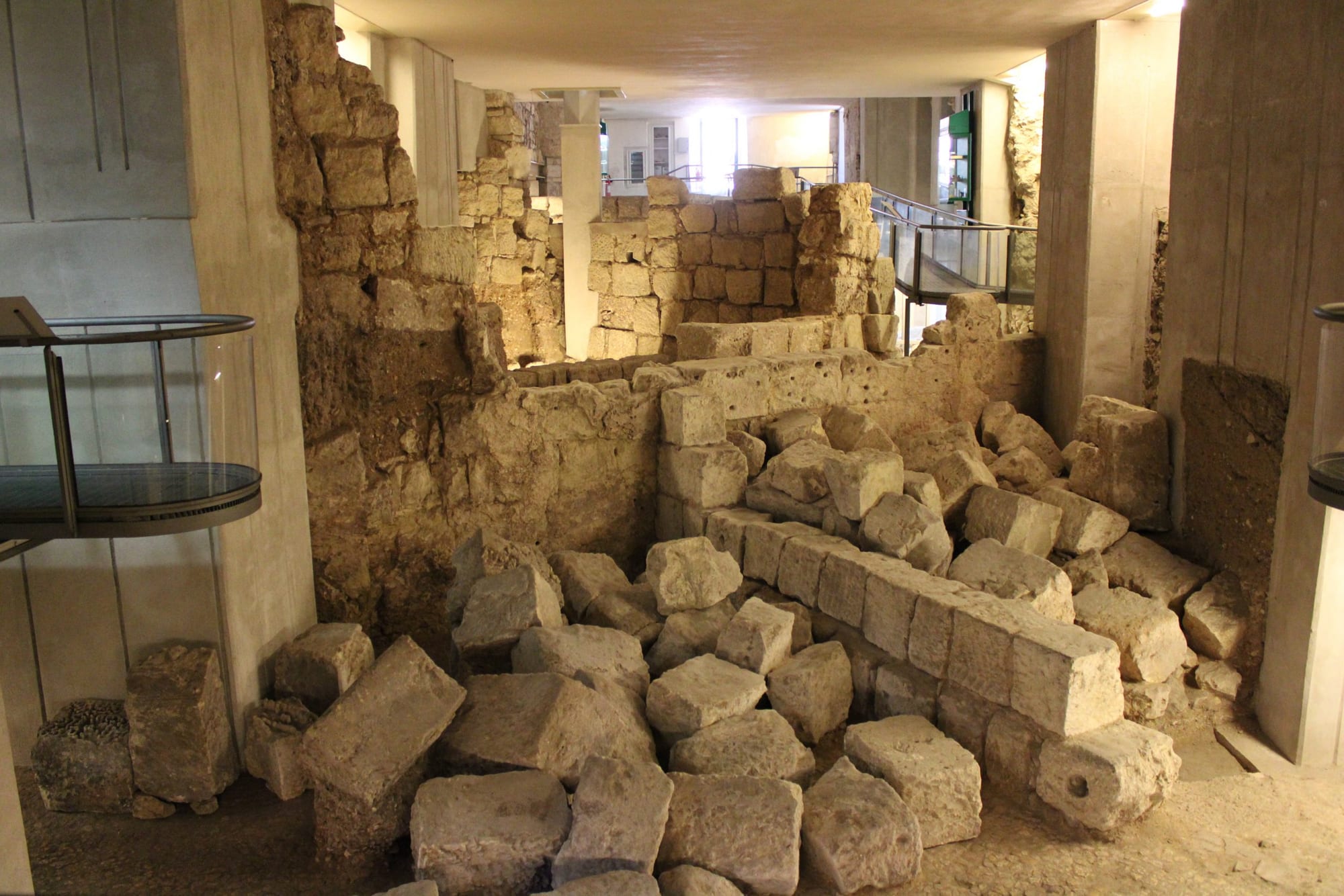 The underground area of Sant'Eulalia, where Roman sewers yielded materials from the Vandal era.
Trade Never Stopped: Ceramics and Sewers in Cagliari
The old tale of a total rupture in maritime traffic caused by endemic Vandal "piracy" has been definitively debunked[cite: 1]. Research led by scholars like Rossana Martorelli and Pier Giorgio Spanu demonstrates that the island's inclusion in the North African kingdom actually reoriented and often boosted the influx of manufactured goods and food supplies[cite: 1].
The primary indicator of this continuity is tableware, specifically African red slip ware (terra sigillata africana), found in its A, C, and predominantly Vandal-era D types[cite: 1]. A prime example of this material wealth was uncovered during excavations at the Archaeological Area of Sant'Eulalia in Cagliari[cite: 1]. Deep beneath the modern city, the meticulous recovery of materials from a monumental Roman-era sewer revealed an intense circulation of type D African tableware (decorated with stamped geometric motifs) and commercial amphorae, such as the typical North African spatheia used for transporting oil and wine[cite: 1]. Stratigraphy proves that this sewer network continued to receive imported waste materials continuously between the 4th and 7th centuries AD[cite: 1].
This abundance was not limited to urban elites[cite: 1]. Explorations in rural contexts, such as the settlement of Villanova Truschedu or the coastal sites of the Sinis peninsula, confirm that these goods regularly reached agricultural communities[cite: 1]. The Vandals effectively took on the role of monopolistic distributors of North African agricultural surpluses, and Sardinia acted as a crucial logistical hub for routes heading toward Ostia, Etruria, the Iberian Peninsula, and Gaul[cite: 1].
Obols for the Afterlife: The Coins of Thrasamund
Sardinia's structural integration into the Vandal economic system finds solid confirmation in the study of currency circulation[cite: 1]. While King Gaiseric tolerated the recycling of existing Late Antique Roman coins, by the end of the 5th century the monetary policy changed radically[cite: 1]. King Thrasamund (496-523 AD) introduced specific, abundant bronze coinage to facilitate small-scale daily transactions[cite: 1].
Pioneering numismatic studies by Giuseppe Lulliri and Maria Bonaria Urban have proven, through the analysis of thousands of pieces from private collections, that the circulation of Vandal coins in Sardinia was far more pervasive than classic historiography had ever hypothesized[cite: 1].
An exceptionally relevant case study is the early Christian complex of Columbaris, located in the ancient city of Cornus[cite: 1]. In this vast cemetery area, excavations unearthed twenty-eight distinctly Vandal coins (including Thrasamund's issues) deposited both inside and outside the tombs[cite: 1]. These coins attest to the spectacular survival of pagan rituals: the so-called "Charon's obol"—a payment for the mythological ferryman of souls—was regularly placed in burials (tombs 15 and 77) or left as an offering (tombs 35, 36, 44)[cite: 1]. Even more fascinating is their discovery near the mensae intended for the refrigerium, the traditional commemorative meal consumed by relatives at the gravesite, well documented in tomb 26[cite: 1].
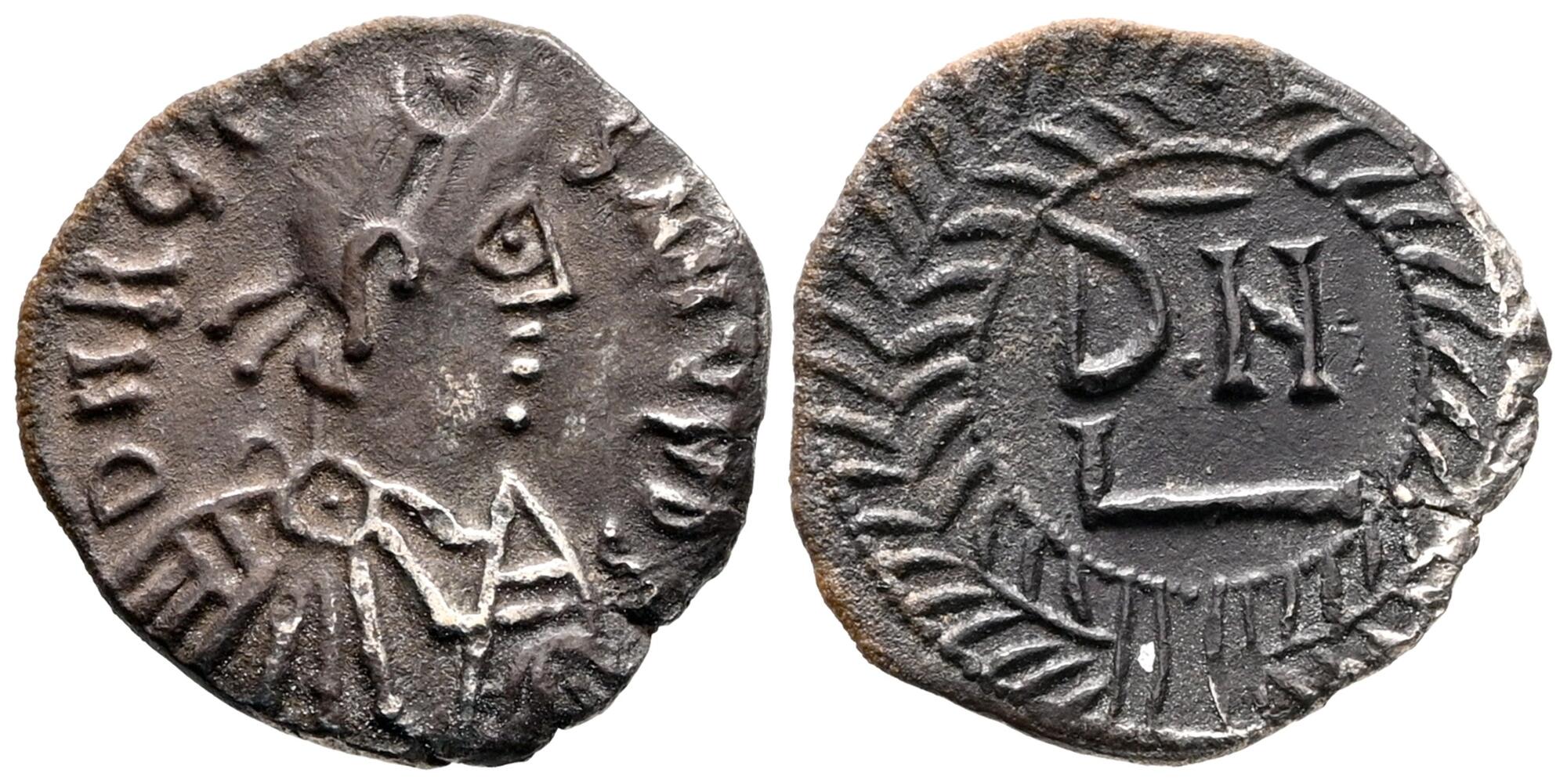 Bronze coins of King Thrasamund, commonly used in Sardinia for micro-exchanges and funeral rituals.
Golden Cicadas and Pannonian Earrings
On the aesthetic front, the presence of Germanic peoples (and the officials accompanying them) introduced specific fashion innovations to Sardinia, found mostly in monumental chamber tombs built with large squared trachyte blocks and barrel vaults[cite: 1].
Archaeology has yielded large inlaid buckles, elaborate fibulae (including the iconic cicada-shaped brooches, an oriental motif), and peculiar polyhedron earrings[cite: 1]. A classic example of these earrings, highly similar to those popular in Late Antique Hungary (like the finds in Óbuda), proves that Sardinian elites, or resident Germanic settlers, imported the fashion trends of the barbarian aristocracies that were reshaping post-Roman Europe[cite: 1]. While they do not indicate mass ethnic replacement, these traces confirm that Sardinia was receptive to the continent's aesthetic shifts[cite: 1].
The Exile That Enriched the Island: Fulgentius and St. Augustine
The most dramatic aspect of Vandal rule, and ironically the most beneficial for the island in the long run, was the religious conflict[cite: 1]. The Vandals, staunch supporters of Arian Christianity, clashed fiercely with the deeply rooted Catholic orthodoxy of the North African clergy[cite: 1]. This conflict was fiercely documented for propaganda purposes by the African historian Victor of Vita in his Historia persecutionis Africanae provinciae[cite: 1].
Vandal kings Huneric and, most notably, Thrasamund implemented severe coercive policies, banishing hundreds of Catholic bishops and deporting a massive contingent to Sardinia, which was considered a suitable penal colony[cite: 1]. This forced exile resulted in an incredible twist of fate: the arrival of dozens of intellectuals transformed the island into a vibrant center of theological output, consolidating its belonging to the orthodox and Roman sphere[cite: 1].
The most charismatic figure was Fulgentius, Bishop of Ruspe[cite: 1]. Born in 467 AD, the bilingual theologian was exiled to Carales, briefly recalled to Carthage for a harsh theological debate, and then exiled again to Sardinia in 520 AD, where he remained until King Thrasamund's death[cite: 1]. In Cagliari, Fulgentius obtained permission from the local bishop, Brumasio, to build a large monastery near the basilica of the martyr San Saturnino, located wisely outside the city walls to guarantee ascetic isolation[cite: 1].
This monastery quickly became a scriptorium of formidable importance for preserving classical and Christian culture. Paleographic research strongly suggests that the famous Greek Codex Laudianus, a magnificent bilingual uncial manuscript containing the Acts of the Apostles now kept in Oxford, was produced right here by Fulgentius' monks[cite: 1].
The fleeing bishops brought more than books: they also carried the sacred relics of St. Augustine of Hippo[cite: 1]. The remains of the great Doctor of the Church, who died in 430 AD during the Vandal siege of Hippo, reached Cagliari and were venerated in a crypt for over two centuries[cite: 1]. Between 721 and 725 AD, facing the threat of Saracen maritime raids, the relics were sold for their weight in gold to emissaries of the Lombard King Liutprand, who transferred them to Pavia[cite: 1].
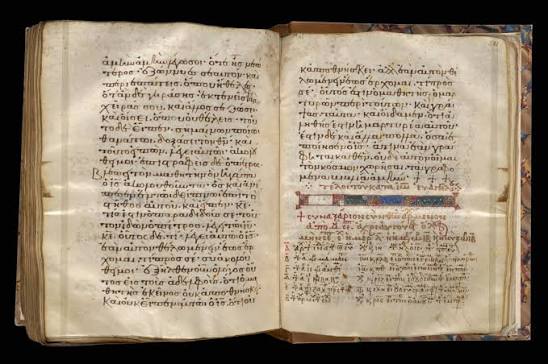 The famous Codex Laudianus was likely crafted in the fervent Cagliari monastery founded by Fulgentius.
Godas' Ephemeral Illusion and Byzantine Revenge
The twilight of the Vandal era was triggered by a political event recounted by the Byzantine historian Procopius of Caesarea: the rebellion of the local governor, a Gothic officer named Godas[cite: 1]. Sent by King Gelimer to collect much-needed taxes, Godas realized the structural weakness of the African kingdom and, in the spring of 533 AD, boldly proclaimed himself independent ruler of the island[cite: 1].
To legitimize his new status and seek an alliance with the Byzantine Emperor Justinian, Godas began issuing his own bronze coinage at the Carales mint[cite: 1]. He struck these small copper coins with the legend CVDA REX and an image of his armored bust, claiming a localized, Roman-flavored autonomy[cite: 1]. Gelimer reacted with lethal speed: he assembled a massive fleet of 120 ships and 5,000 men under the command of his brother Tata (Tzazo)[cite: 1]. The expedition stormed Carales, killed Godas, and violently crushed the rebellion[cite: 1].
This military effort, however, proved to be a strategic disaster[cite: 1]. The absence of Gelimer's best troops from Africa allowed the Byzantine general Belisarius to land in Tunisia and defeat the Vandals at the decisive battles of Ad Decimum and Tricamarum[cite: 1]. In 534 AD, the Byzantine duke Cyril arrived in Sardinia carrying the severed head of Tata as a grim warning, securing the peaceful surrender of the Vandal garrison[cite: 1]. The island was annexed to the Eastern Roman Empire, though archaeology shows the transition was not entirely bloodless: the rural site of Fusti 'e Carca in Tertenia revealed a destruction layer caused by fire, dating precisely to the chaotic Vandal-Byzantine conflict[cite: 1].
The Mystery of the Marten: A Linguistic Legacy
Despite seventy-eight years of bureaucratic domination, the Vandals left virtually no deep mark on the native population. The most irrefutable proof of the failure of their ethno-cultural integration project comes from linguistics[cite: 1].
The fundamental studies of the great linguist Max Leopold Wagner, author of La lingua sarda (1951), categorically demonstrated the absence of a Vandalic linguistic "superstratum" in both modern and ancient Sardinian[cite: 1]. Unlike the Spanish or the Genoese, the Germanic language of the soldiers did not affect the conservative, rural Latin spoken on the island[cite: 1]. The rulers, barricaded in their coastal fortresses, had scarce interactions with the agro-pastoral communities[cite: 1].
The only concrete and vital Sardinian word that Wagner identifies with certainty as a direct Germanic loanword (Vandal or Gothic) is the name of an animal: the marten, called màrtsu, màrtsiu, or mràxu in archaic dialects of the southern Sulcis region[cite: 1].
Ultimately, the "Vandal Century" left a profound structural footprint. The isolation of the mountainous zones, worsened by the influx of deported rebels, consolidated the dramatic dichotomy between the pacified coast and the insubordinate interior[cite: 1]. This forced the subsequent Byzantine governors to split power between a civil praeses and a military dux stationed at Forum Traiani (Fordongianus) just to monitor the Barbagia region[cite: 1]. It was precisely these administrative fault lines that sowed the seeds for the future independence of the medieval Judicates[cite: 1].