The mascot
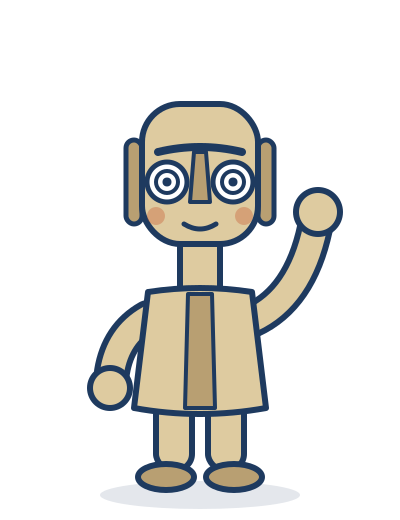
Hi, I'm Prameddu
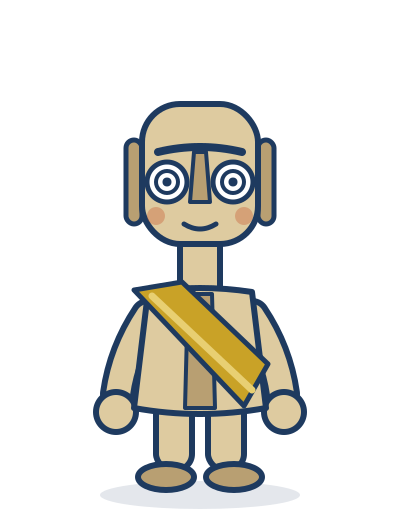
The stone giant who guides you through Sardology. He digs, reads, investigates, takes photos — then comes back to tell you what he found.
His name comes from Mont'e Prama, the hill in the Sinis peninsula where in 1974 dozens of statues of archers, warriors and boxers over two metres tall came back to light: among the oldest free-standing statues in the Mediterranean. Prameddu is one of them, awake after three thousand years and very, very curious.
- Material
- Sinis sandstone
- Height
- 2.3 metres
- Found
- Cabras, 1974
- Dated
- 9th–8th century BC
- Role
- Sardology's guide
The map
Eight places I've already nosed around
Real coordinates: the outline is drawn from the island's actual capes and gulfs, scale bar included.
Bragoni and cambali
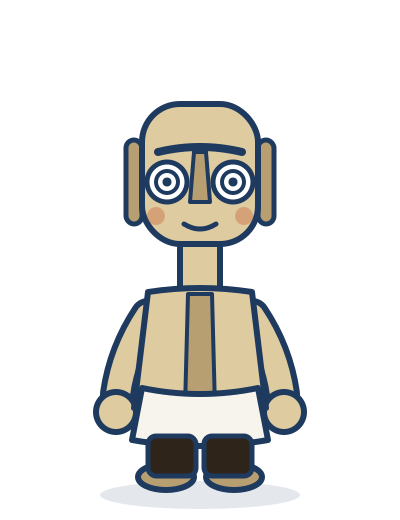
White linen breeches stopped at the knee, and under them the cambali: hand-stitched leather leggings, for crossing the scrub without leaving your shins in it.
The barretina
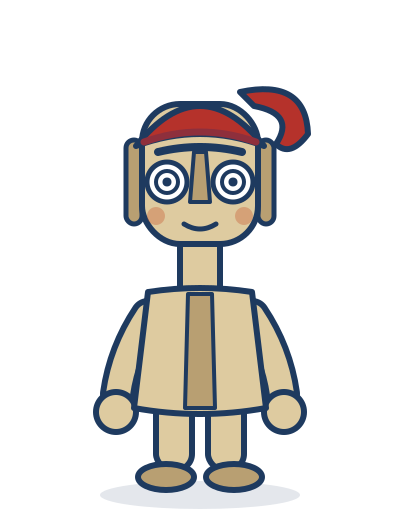
A red wool cap that flops to one side. It came with the Catalans and never left, much like the town's own name.
The ragas
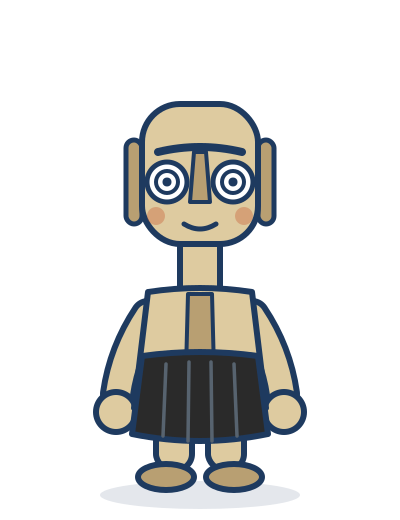
A kilt of orbace, wool beaten until it turns the rain. Worn pleated over the trousers: in Barbagia this is menswear.
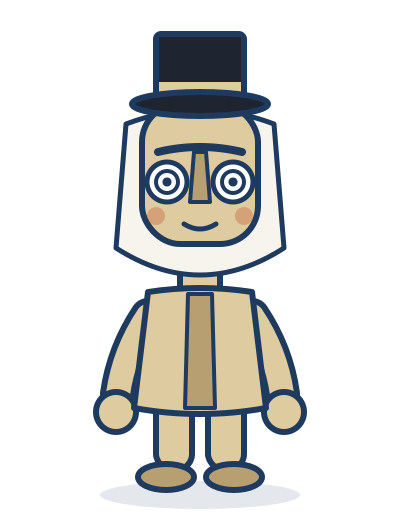
The Componidori's hat and veil
The lead rider of the Oristano Sartiglia: black top hat, white veil, hidden face. Prameddu wears the veil but not the mask — it would cover his eyes.
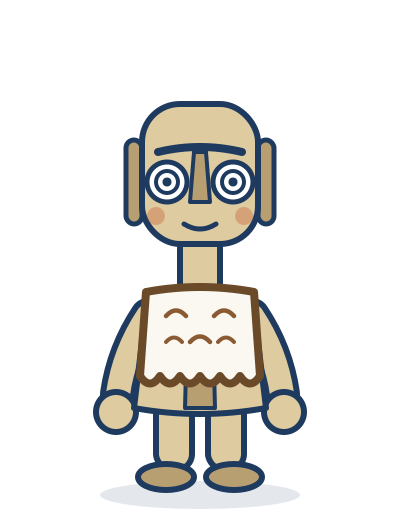
The mastruca
A sleeveless sheepskin worn fleece-out. Cicero named it two thousand years ago and the shepherds still use it.
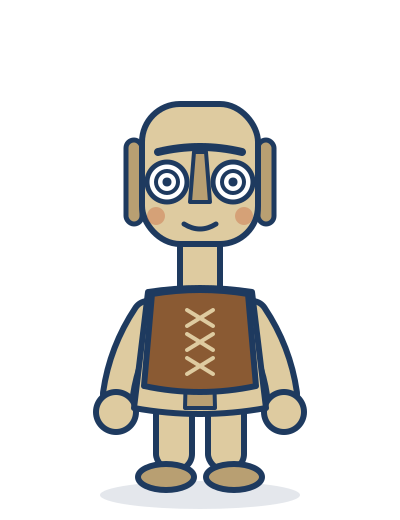
Su collettu
A sleeveless leather jerkin laced up the front with rawhide. In the Marmilla it goes over the shirt and never quite comes off.
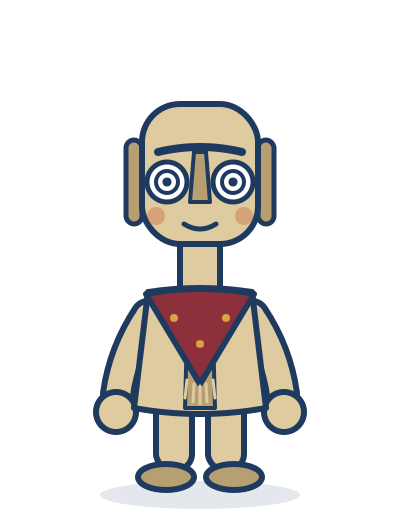
The silk shawl
Flower-embroidered silk, long fringes, folded into a triangle over the shoulders. In the Campidano it is the piece that says how much its wearer counts.
The byssus stole
Sea silk: the filament a pen shell anchors itself to the seabed with, spun and woven only on Sant'Antioco. Brown when dry, gold in the light.
The studio
Where I keep the things I find
Three thousand years underground, then a room of my own. Every object in here I picked up somewhere on the island. Look closely: half of it moves.
- Nuraghe modelA dry-stone truncated tower, not a drop of mortar. Some seven thousand still stand on the island.
- Phoenician amphoraWine and oil travelled like this, from Tharros to Carthage and back.
- Alghero coralRed, fished seventy metres down. The town put it on its coat of arms.
- Carasau breadA sheet baked twice until there is nothing left to go mouldy: it keeps for months, which is why the shepherds carried it.
- Bottle of mirtoBerries steeped in alcohol for forty days. Then you wait some more.
- Mamuthone maskDark wood and thirty kilos of cowbells on your back: that is how carnival opens in Mamoiada.
- LauneddasThree canes played at once on a single unbroken breath, taken through the nose. Three thousand years and still going.
- Pibiones rugPibiones means grape berries: the raised knots, pulled up one at a time on a horizontal loom.
- PintaderaA nuragic terracotta stamp. It decorated bread, perhaps. Nobody is really sure.
- Mont'e Prama fragmentsMine. Five thousand pieces out of a ploughed field, and some are still not back where they belong.
You'll know him by three things: the concentric-circle eyes, the stone braids, and the habit of interrupting a story halfway through to say “wait, there's one more thing”.
Read the blog