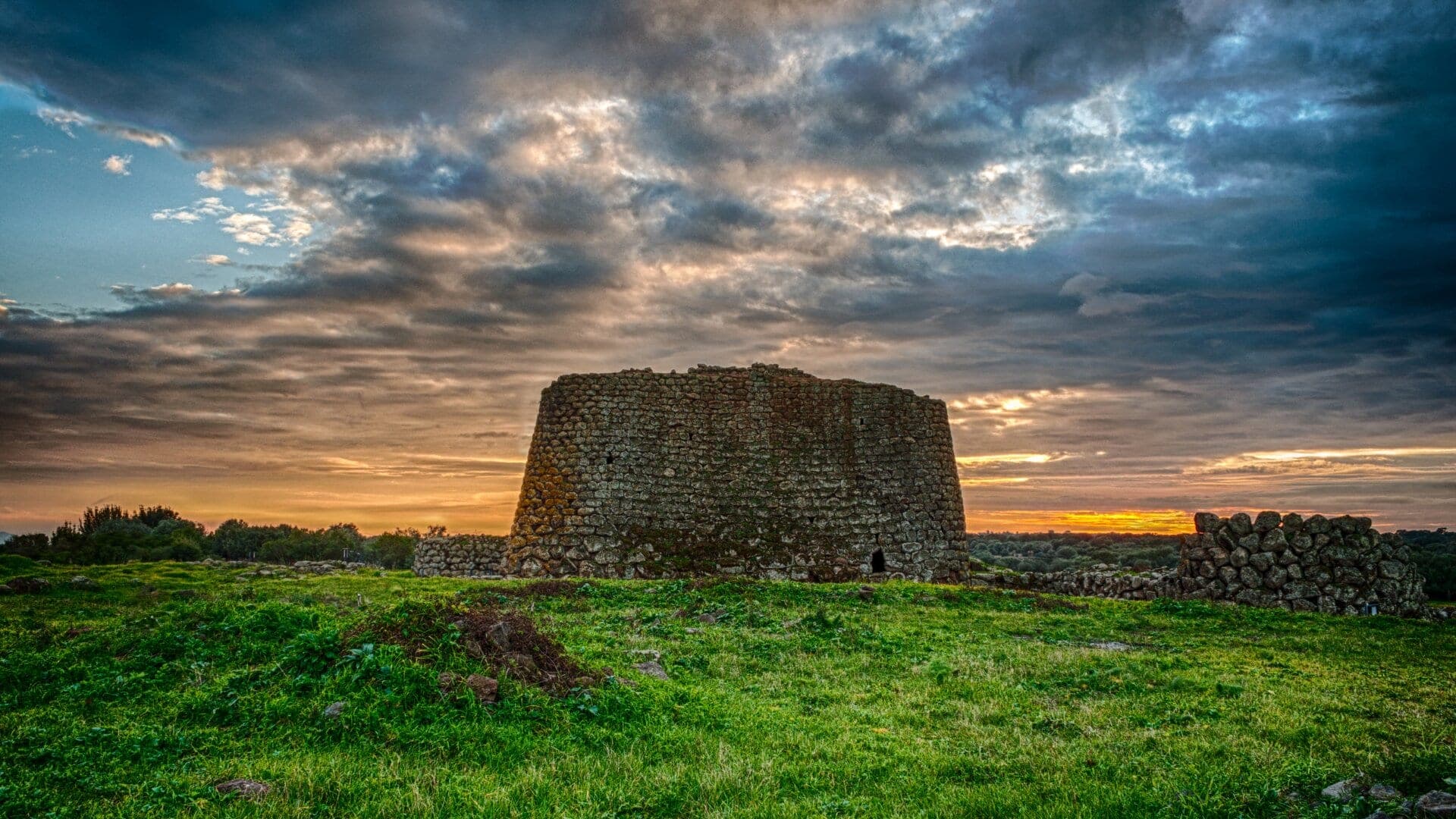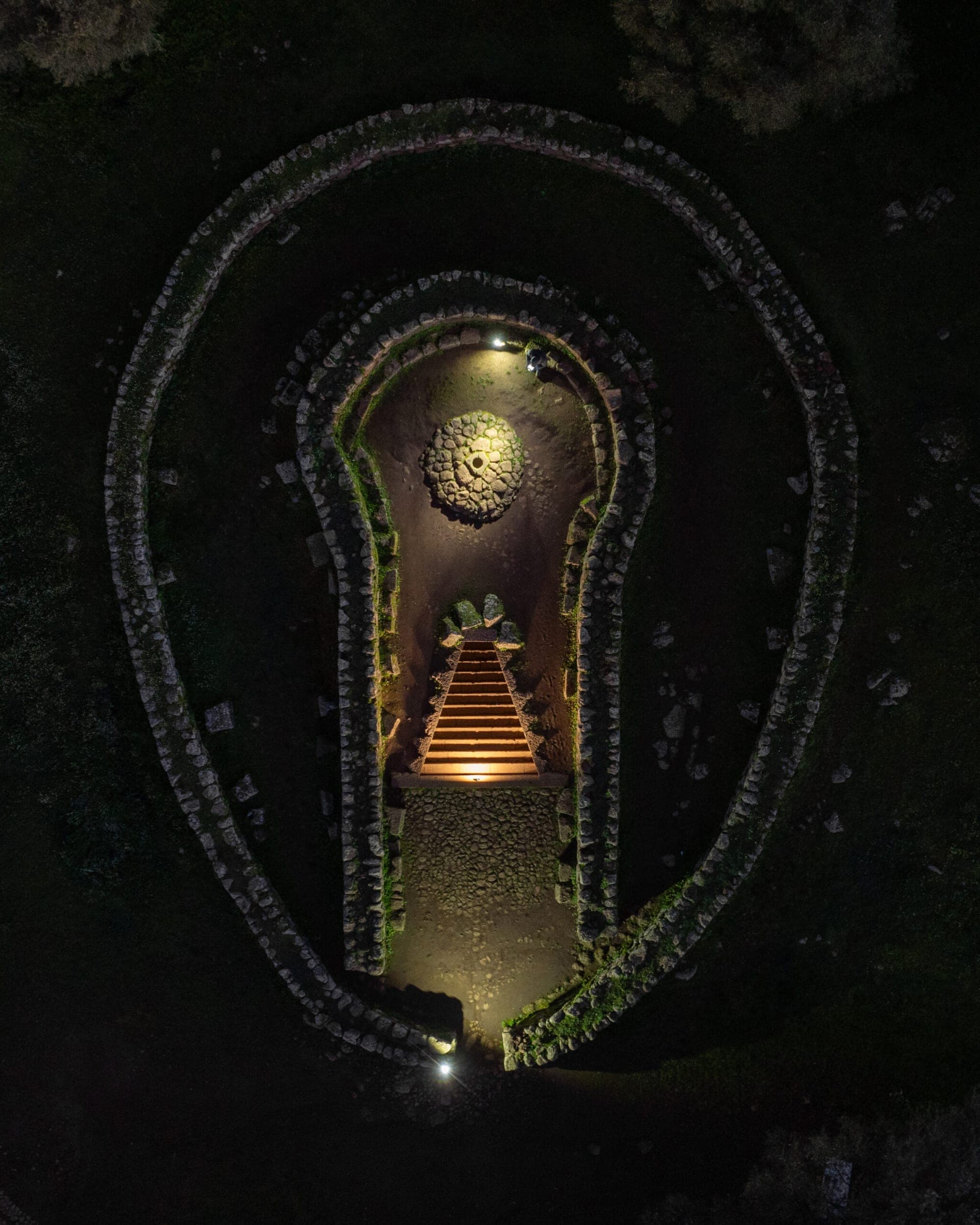
In the heart of the Mediterranean Sea, Sardinia jealously guards one of the most fascinating, complex, and least-known archaeological mysteries in the world. When you think of Sardinian archaeology, the mind immediately jumps to the thousands of Nuraghi dotting the landscape. But there is more. Forget the basalt towers for a moment: today, we bring you to discover a literal army of stone, unique in the history of ancient art.
The discovery: a plow strike that changed history
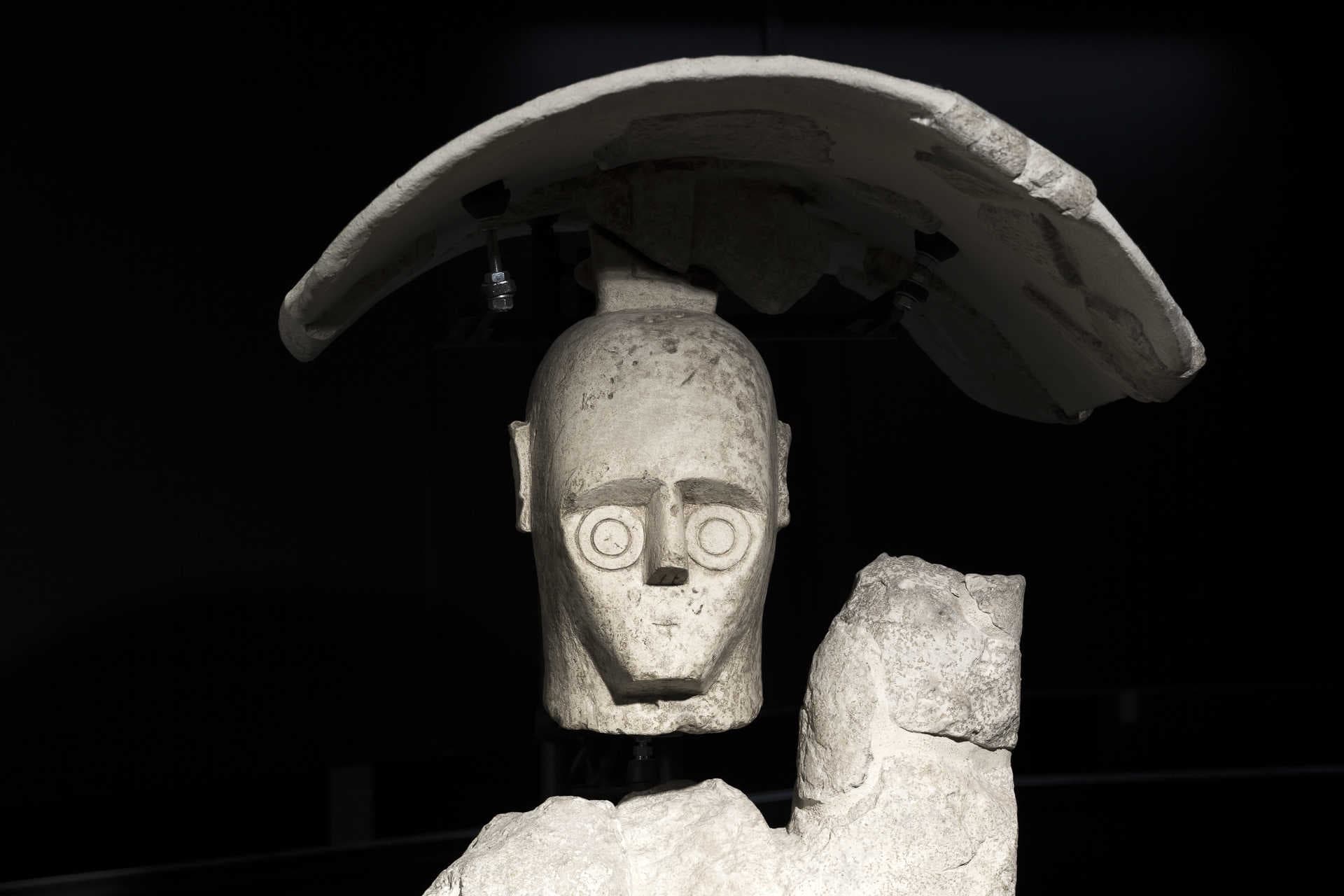
It all began in March 1974 on the Sinis peninsula, near the Cabras lagoon in central-western Sardinia. A farmer was plowing a field in an area called Mont'e Prama. Suddenly, his plow blade struck a hard obstacle. Digging to remove what looked like a large rock, Sisinnio found himself face-to-face with a sculpted head featuring strange, perfectly round eyes.
That accidental discovery triggered several excavation campaigns (the most significant between 1975 and 1979), which brought to light a monumental necropolis and an invaluable treasure belonging to the glorious Nuragic civilization.
The Army and its divisions: Who are the Giants?
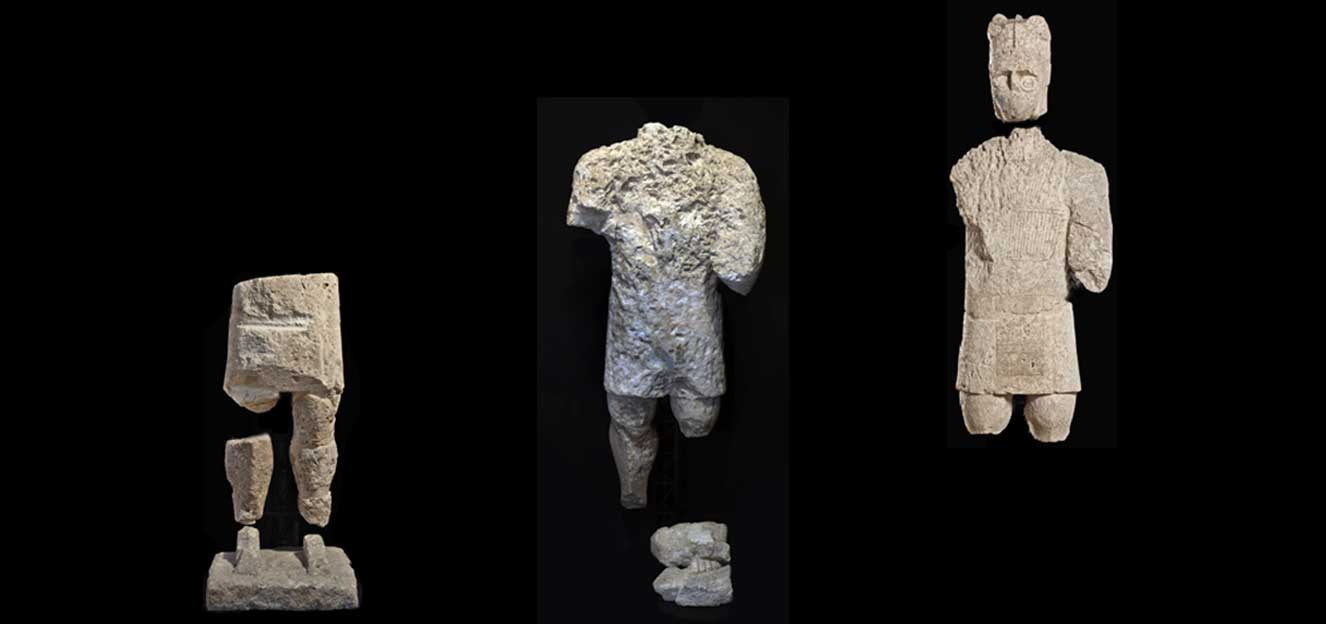
Carved from blocks of local chalky sandstone (easy to sculpt but unfortunately fragile), these sculptures are imposing. Their height ranges between two and two and a half meters, weighing up to 400 kg each. They do not represent abstract deities, but well-defined human figures, sculpted in a geometric style that recalls the famous Nuragic "bronzetti" (bronze statuettes), but on a monumental scale.
The army is composed of different "units":
The Boxers (the majority): Bare-chested fighters wearing a fringed kilt. Their right arm is armed with a spiked glove, while the left holds a heavy, flexible shield over their head, ready to parry blows.
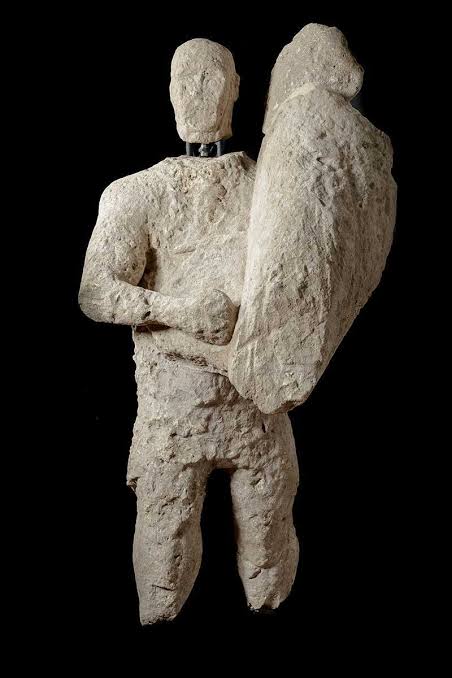
The Archers: More covered figures, wearing a short tunic and a chest plate for protection. Their left arm, protected by a sheath and a glove, held the bow, while they carried a quiver on their back.
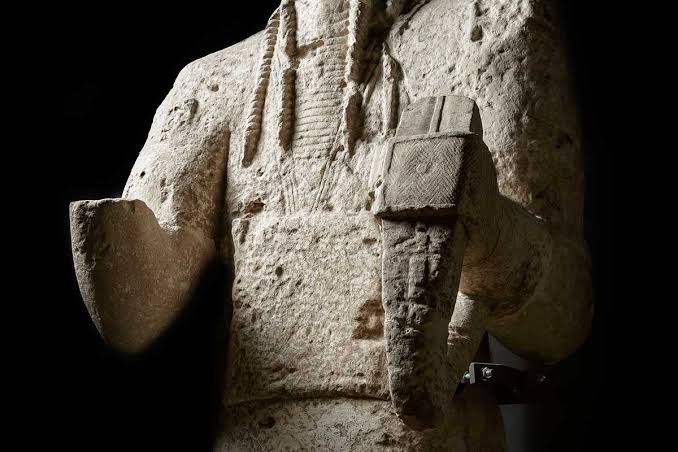
The Warriors: The most fragmented sculptures. They wear helmets with long horns, grip a decorated circular shield, and carry a sword resting on their shoulder.
Alongside these warriors, excavations also yielded dozens of stone models of Nuraghi, proving the strong symbolic and identity-related value these towers held for the Nuragic people.
The mystery of the eyes and the meaning of the work
The most iconic, hypnotic, and studied feature of these statues is undoubtedly the face. The nose and eyebrows form a distinct "T" shape, while the eyes are composed of two perfect concentric circles, almost certainly carved using a compass. This detail, almost alien and geometrically precise, gives the Giants a deep, mysterious, and unreadable stare.
But why were they created? They were situated above a necropolis that housed the pit tombs of young, healthy, and robust men. Scholars believe the Giants were a celebration of mythical ancestors, heroes of the past placed as guardians over the graves of an Iron Age aristocratic and warrior elite.
5 Curious Facts about the Giants (that you might not know)
The "Kouroi" of the Western Mediterranean: The dating is still debated, but the Giants are estimated to date back to a period between the 10th and 8th centuries BC. This makes them the oldest free-standing statues in the western Mediterranean basin, potentially predating the famous Greek statues (the Kouroi).
A puzzle of over 5,000 pieces and 30 years in the dark: The statues were not found standing. They were violently shattered (perhaps by the Carthaginians, or due to internal struggles between Nuragic factions) into over 5,178 fragments. For almost thirty years, these pieces remained in storage, until 2007, when the Li Punti Restoration Center (Sassari) began one of the most complex archaeological restorations in history, which lasted for years.
They were once painted: Today we see the yellowish-gray color of the sandstone, but laboratory analysis has revealed traces of pigments. Originally, the Giants were painted in bright colors, including red, black, and perhaps white, to make them even more fearsome and realistic.
Advanced technology: The details of the braids, the shield decorations, and the geometric perfection of the eyes demonstrate that Nuragic sculptors used highly advanced metal tools (such as bow drills and compasses) to work the stone with millimeter precision.
Where to admire them today: After a decades-long odyssey, this army is finally on display to the public and is constantly expanding thanks to new excavations. The Giants are mainly divided between two locations: the National Archaeological Museum of Cagliari and the "Giovanni Marongiu" Civic Museum in Cabras.