
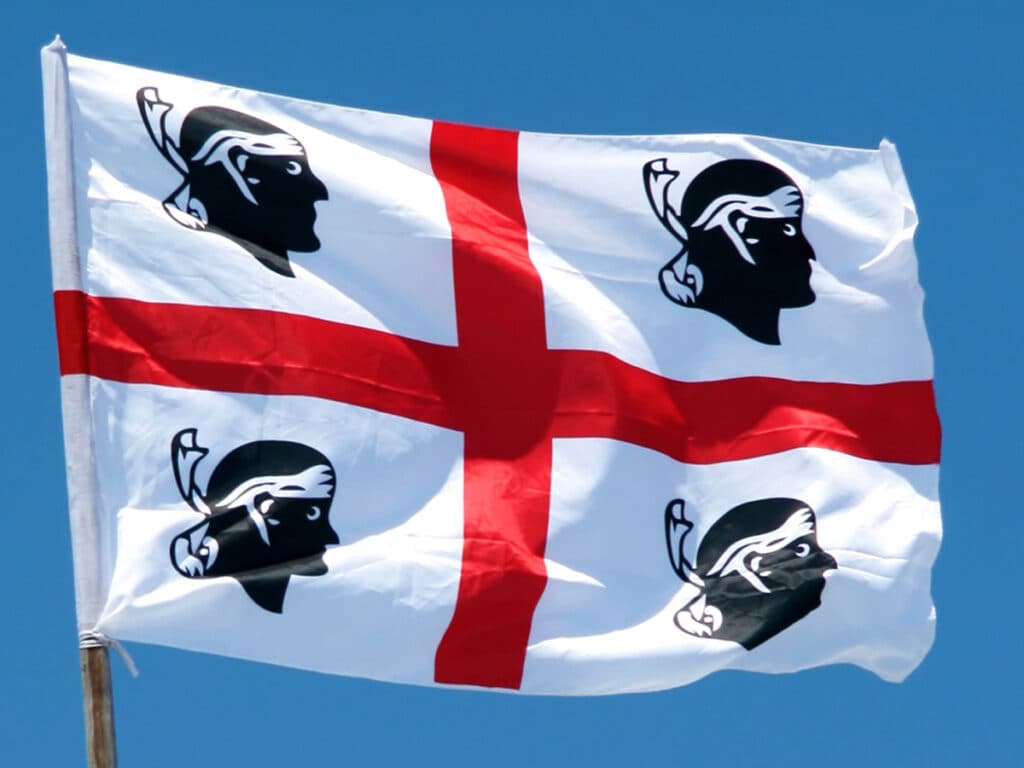
It was 1907 when a young German linguist named Max Leopold Wagner began traveling across Sardinia on muleback. He rode along dirt tracks, slept in shepherds' huts, and listened to farmers in the rural markets of Barbagia and Campidano. Wagner wasn't looking for archaeological ruins; he was hunting for sounds. He had a strong intuition that this island, anchored in the middle of the western Mediterranean, concealed something extraordinary. What he was hearing was not a regional accent, nor broken Italian, but a living linguistic fossil.
Listening to everyday conversations, Wagner realized that Sardinian shepherds were speaking a language structurally and phonetically closer to the tongue of Julius Caesar than any other modern idiom. From that journey over a century ago, and the decades of research that followed, modern Sardinian linguistics was born.
Yet, even today, especially among tourists and sometimes on the Italian mainland, you will often hear Sardinian referred to as an "Italian dialect." It is a reductive, scientifically inaccurate label that masks a complex history of conquest, isolation, civil rights struggles, and a fierce modern academic debate.
Not a Dialect: The Genetics of a Language
To understand why Sardinian is a distinct language and not a dialect, we must clear up a common political misunderstanding. As the linguist Max Weinreich famously stated, "A language is a dialect with an army and a navy." From the perspective of structural linguistics, the distinction between a language and a dialect is not based on statehood, but on genealogy and the autonomy of the grammar and vocabulary system.
A dialect, strictly speaking, is a geographic variation of a broader linguistic system. Sardinian is not a variation of Italian. It does not derive from Italian, it shares no roots within Italian, and its historical development was completely independent. Both languages share the same "mother"—Latin—but they are siblings who parted ways two thousand years ago. In international classifications, such as the ISO 639 standard, Sardinian is assigned its own autonomous code (sc or srd), standing on equal footing with French, Spanish, or Romanian.
The linguistic split traces back to a precise date: 238 BC, when the Roman Republic wrested control of Sardinia from Carthage. The Romanization of the island was slow but relentless. Roman soldiers, merchants, and settlers mingled with the indigenous Nuragic and Punic populations. The language they brought wasn't the refined Classical Latin of Cicero's speeches, but Vulgar Latin, the sermo rusticus spoken by the legions.
Unlike other European regions, Sardinia experienced early Roman influence and, crucially, subsequent deep isolation. When the Western Roman Empire collapsed in 476 AD, the Germanic invasions that swept across Europe—mixing Latin with barbarian tongues to create French, Spanish, and northern Italian dialects—barely touched the island, save for a brief and linguistically insignificant Vandal occupation. Sardinia fell under the Byzantine sphere of influence, cutting it off linguistically from mainland Europe. This profound isolation is the reason why Sardinian is literally its own distinct branch on the Romance language family tree, classified solely as an "Insular Romance" language.
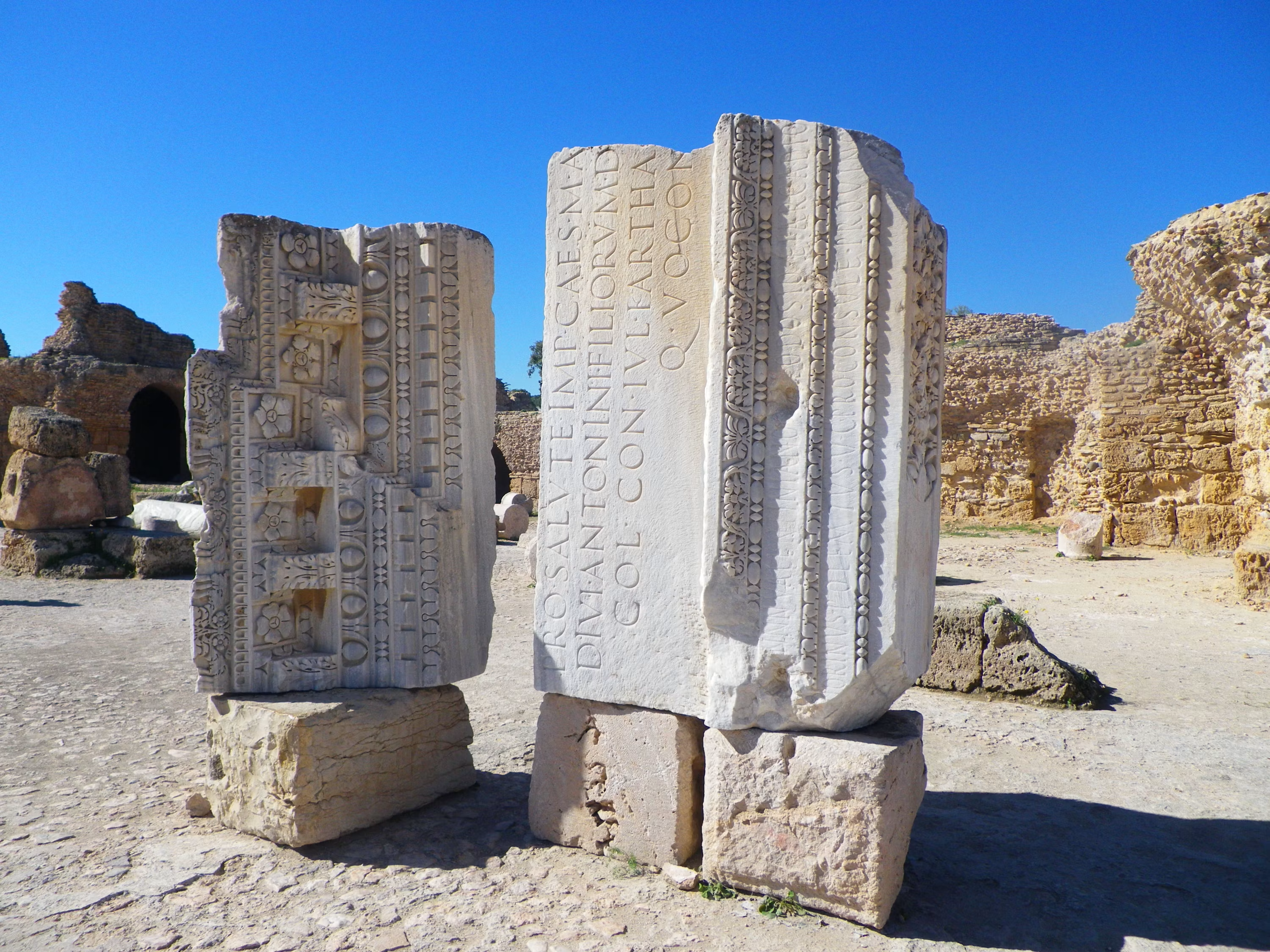 Rome's legacy is still written in stone and spoken in the streets of the island.
The Time Capsule: Why Sardinian is Today's Latin
If you want to know what the Latin spoken on the streets of ancient Rome sounded like, you should listen to a modern Sardinian, preferably from the rugged central mountains. Linguistic studies estimate that Sardinian retains about 8% more original phonetic features of Latin than Italian does, and a staggering 25% more than French.
This exceptional preservation is evident in a few key markers that measure the distance between Sardinian and Italian. The first, and most striking for English speakers, is the plural formation. Eastern Romance languages (like Italian and Romanian) form the plural by changing the final vowel: gatto (cat) becomes gatti. Sardinian, belonging to the Western Romance group alongside Spanish and French, retains the Latin sigmatic plural—adding an 's' to the end of the word (derived from the Latin accusative plural -os and -as). In Sardinian, su gattu becomes sos gattos.
Another acoustic fossil involves the hard velar sounds, the "C" and "G". In Classical Latin, the word for one hundred was pronounced kentu, and the word for sky was kelu. While in Italian this sound softened and became palatalized before the vowels E and I (cento, cielo with a "ch" sound), the Sardinian spoken in the central regions never made this phonetic leap. Even today, in towns like Nuoro, one hundred is kentu, and sky is kelu. The ear of a Roman citizen from the 1st century BC would recognize it instantly.
Sardinian's originality isn't just about preserving Latin; it's also about making different choices. Take definite articles ("the" in English). While Italian (il, la), French (le, la), and Spanish (el, la) derived their articles from the Latin demonstrative pronoun ille and illa (that), Sardinian took a different route. It adopted the pronoun ipse and ipsa (itself), transforming them into su (masculine) and sa (feminine). This is an incredibly rare trait in the Romance language family, shared only partially with the local dialect of Mallorca in the Balearic Islands.
The core vocabulary also rejected the Germanic innovations that took root in Italy. To say "white" (a word of Germanic origin in Italian, bianco), Sardinian uses arbu or albu (from Latin albus). For "house," Italian chose the term that in Latin meant a rural hut (casa), while Sardinian kept the aristocratic domo (from domus). And for tomorrow, instead of a derivative of morning, Sardinian uses the untouched cras from Classical Latin.
One Language, Two Souls (and Many Nuances)
Speaking of "Sardinian" in the singular is a useful linguistic abstraction, but the reality on the ground is far more complex. The island is divided almost perfectly in half by an imaginary line (an isogloss) running from Oristano on the west coast to Tortolì on the east.
North of this line, the Logudorese macro-variant is spoken (featuring its strong, highly conservative Nuorese sub-variant); to the south, Campidanese dominates.
Logudorese is the variant that has kept the archaic traits most intact, shielded by the geographical isolation of the harsh central-northern mountains. This is where you find the hard kentu and kelu sounds. Campidanese, spoken across the vast southern plains and around the capital city port of Cagliari, had a different history. Being more exposed to trade and foreign domination (Pisan, Genoese, Aragonese, Spanish), its language evolved, absorbing loanwords and softening its sounds. In the Campidano area, kentu palatalized and became centu.
This north-south divide is not recent; its roots lie in the Middle Ages. Between the 11th and 14th centuries, during the era of the Giudicati (the four independent Sardinian kingdoms), Sardinian became the official state language. The local rulers drafted their laws, land donations, and legal registers in the language of the people, not in Latin—centuries before Italian or French did the same. The famous Condaghes, such as the Condaghe of San Pietro di Silki compiled between the 11th and 13th centuries, prove that geographical linguistic nuances were already firmly established a thousand years ago.
It is worth noting that in the extreme north of Sardinia (Gallura and Sassari), the local idioms (Gallurese and Sassarese) are not linguistically classified as Sardinian, but rather as Corsican-Tuscan dialects. They formed in the late Middle Ages following heavy migration from neighboring Corsica and Pisan domains, layering over a Sardinian substratum. They are deeply part of the island's culture, but genetically belong to a different branch.
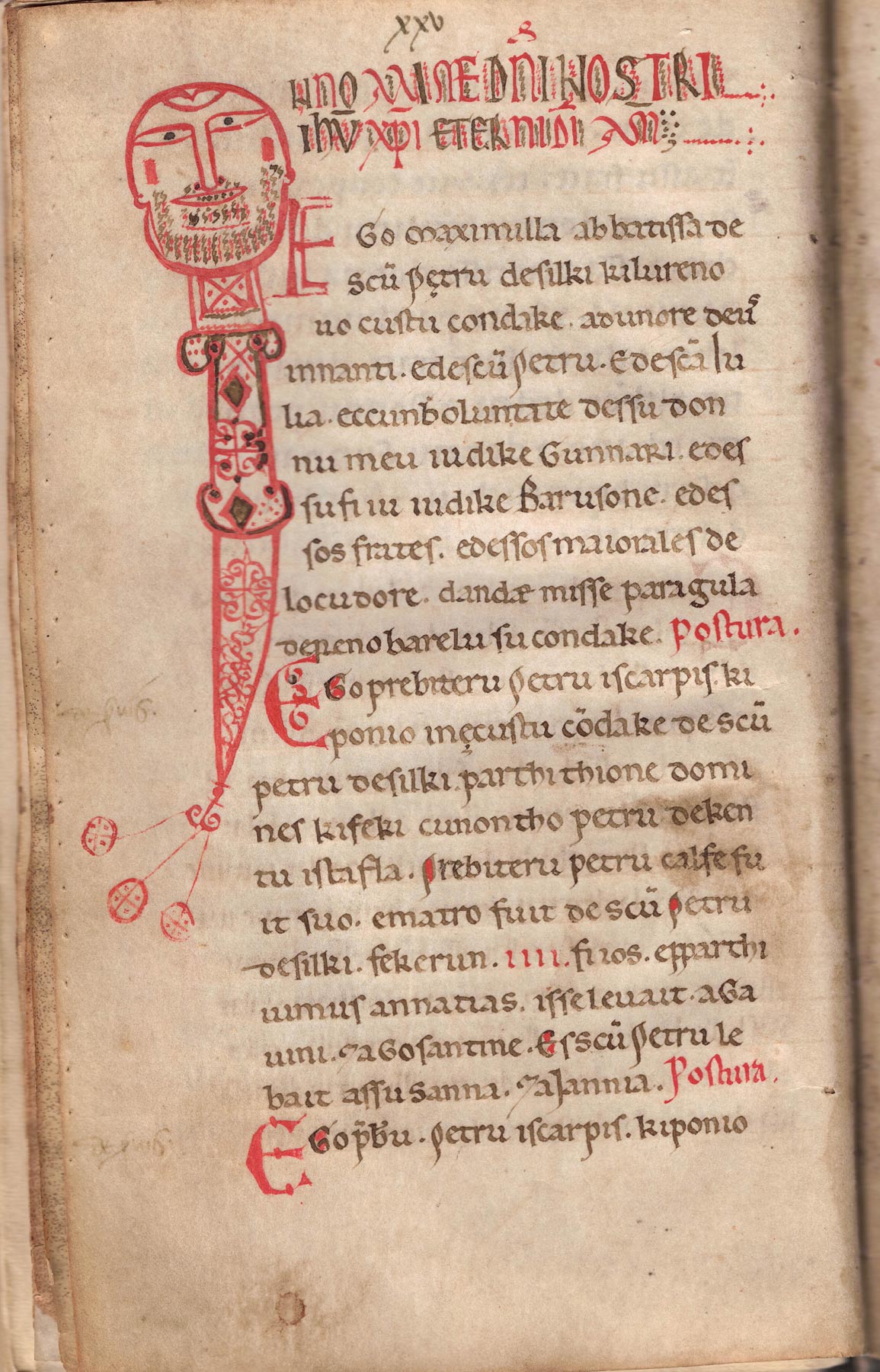 Medieval Condaghes are the first written proof of Sardinian used as an administrative language.
The Long Road to Recognition
Despite its historical pedigree, for over two centuries Sardinian was treated as a "problem to be fixed." Following the unification of Italy in 1861, the new state imposed strict Italianization through primary schools. For generations, students were severely forbidden from speaking their mother tongue in class. Teachers, often from the mainland, mocked and punished those who used sa limba. This process, which lasted until the economic boom of the 1960s, created a massive psychological stigma: Sardinian became synonymous with ignorance, poverty, and rural backwardness, while Italian represented progress and modernity. Many parents intentionally stopped speaking Sardinian to their children so as not to "ruin their future."
The legal turning point came remarkably late, in 1999, with the passing of National Law 482, which protects "historical linguistic minorities." Sardinian was finally recognized by the Italian State. This opened the door for bilingual road signs, public documents, and limited optional teaching in schools, though chronically hindered by a lack of funding.
However, state recognition opened a fierce internal Pandora's box: to issue official documents or teach a language, you need a standard orthography, which Sardinian did not possess. In 2006, the Autonomous Region of Sardinia experimentally adopted the Limba Sarda Comuna (LSC). It is a written standard designed as a compromise between the transitional dialects of Logudorese and Campidanese.
The introduction of the LSC sparked a fierce academic and grassroots debate that still rages today. One faction of scholars and activists argues that a written standard is the only way to save Sardinian from extinction and to translate modern laws and literature. The opposing faction, largely based in deep Campidanese and Nuorese communities, rejects it entirely, calling it an artificial "laboratory language" that flattens local richness by imposing words no one actually uses in their hometown. The core issue is that a language, unlike numbers, is tied to the emotional identity of its speakers, who strongly resist top-down rules.
Sardinian in the 21st Century
Today, the statistics tell a precarious story. According to the UNESCO Atlas of the World's Languages in Danger, Sardinian is classified as "definitely endangered." An estimated one million people understand and can speak it, but the alarming data concerns intergenerational transmission. While in the 1970s almost 70% of Sardinian children learned the language as their mother tongue, today the percentage of active speakers under the age of twenty has plummeted to less than 15%.
Yet, against this demographic decline, a powerful cultural renaissance is taking place. The language has broken out of its rural confines and claimed spaces unimaginable thirty years ago. On the internet, the Sardinian language Wikipedia boasts over 7,000 articles. Social media is teeming with content creators, meme pages, and educators using their local variants to discuss current events, video games, and politics.
Music is perhaps the strongest vehicle for this resistance. Alongside the traditional polyphonic Cantu a Tenore choirs (recognized by UNESCO as Intangible Cultural Heritage), today dozens of Sardinian rock bands, reggae groups, and rappers fill town squares singing exclusively in their local dialects. They are proving to the younger generation that sa limba isn't just for tending sheep—it is a living tool to express the anger, joy, and reality of contemporary urban life.
Sardinian, therefore, is not a museum relic. It is a bridge connecting the ancient Roman past with the digital present, sustained today, as it was a thousand years ago, by the stubbornness of an island that refuses to speak with just one voice.