In 241 BC, on the timber deck of Consul Gaius Lutatius Catulus's flagship off the western tip of Sicily, Carthage conceded defeat and signed the treaty ending twenty-three grueling years of the First Punic War. The terms were staggering: Carthage had to evacuate Sicily entirely and pay Rome an indemnity of 3,200 silver talents—roughly eighty-four metric tons of precious metal—spread across a single decade. Crucially, Sardinia was never mentioned in that treaty. The rugged island, the second largest in the Mediterranean, remained fully under Carthaginian sovereign rule, shielded by its fortified coastal harbors, its fertile grain plains, and garrison troops stationed along the mountain frontiers.
Yet just three years later, in 238 BC, Roman military standards were raised unchallenged over the quays of Karalis (modern Cagliari) and Tharros. Rome did not risk a single warship or fight an epic fleet engagement to seize the island. Instead, the Roman Senate executed one of the most cynical and brazen diplomatic shakedowns in classical antiquity: a geopolitical extortion scheme engineered around mutiny, starvation, and the terrifying threat of an unwinnable war.
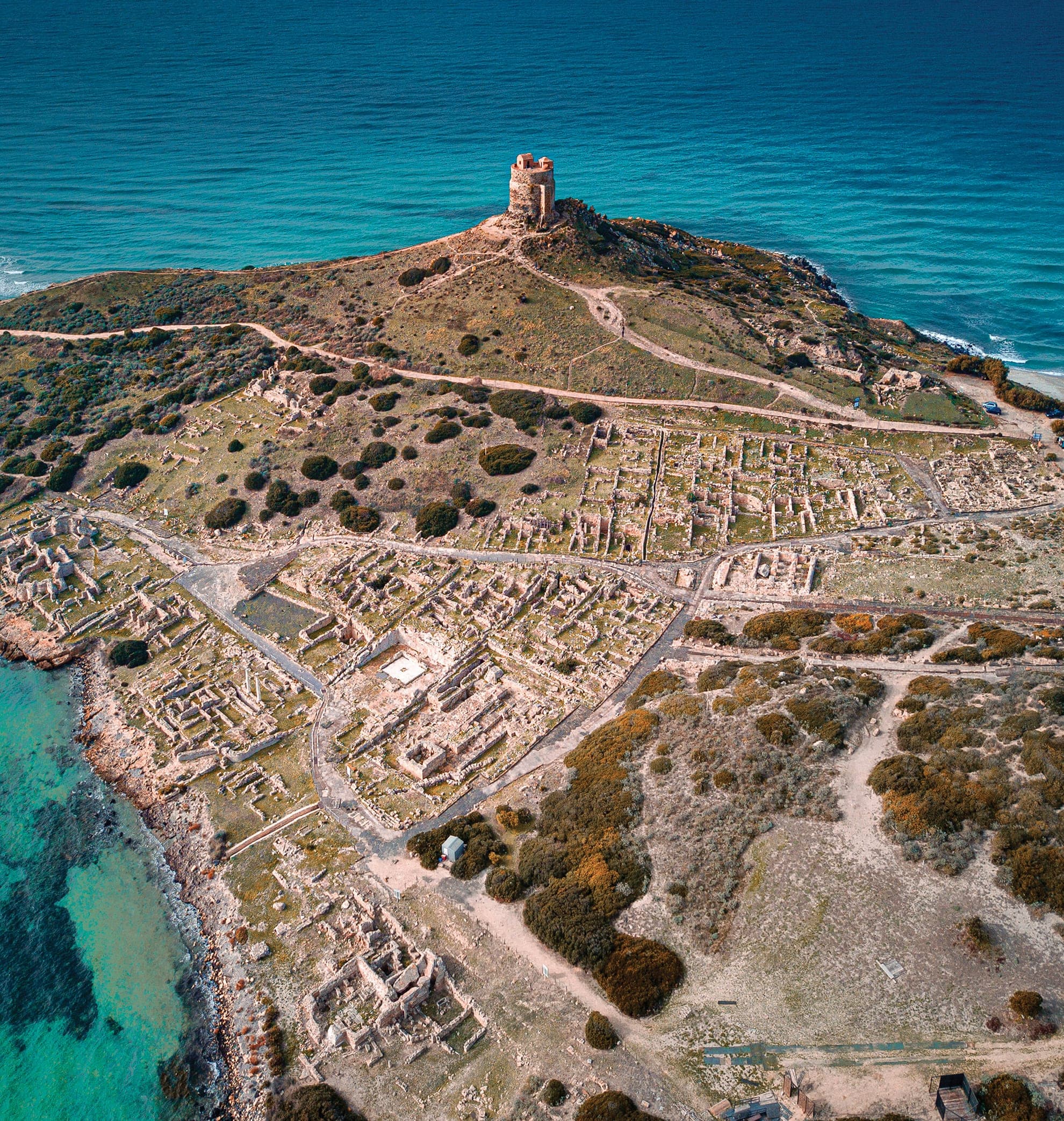
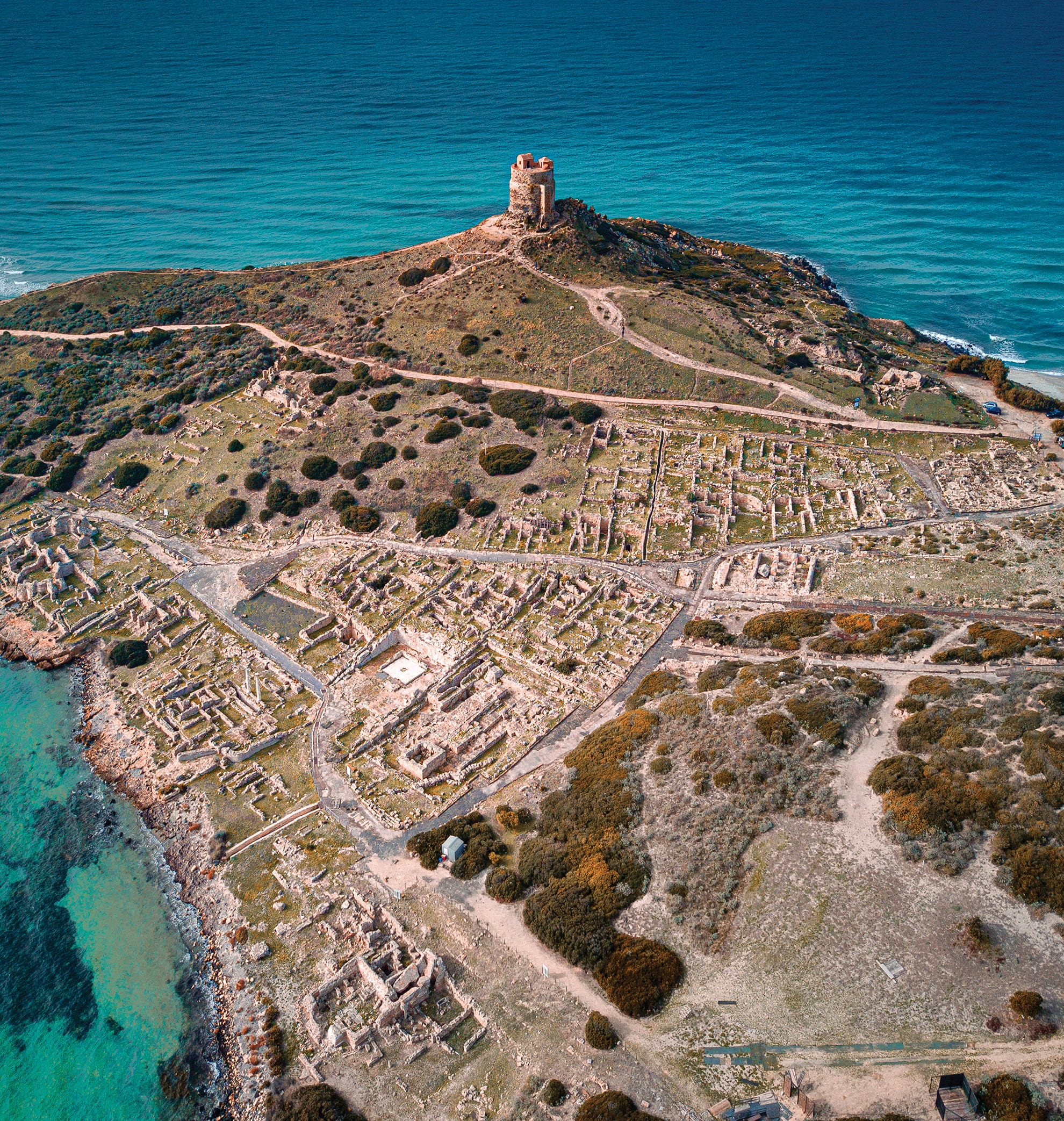 The natural harbor of Tharros on Sardinia's western coast, a primary naval anchorage in the Western Mediterranean.
The mercenary mutiny: how Carthage lost its grip
To understand how Rome captured Sardinia without an amphibious assault, one must look at the docks of Carthage immediately after the defeat in Sicily. Unlike Rome, which fielded armies of citizen-farmers, Carthage fought its major wars using mercenaries contracted from across the western Mediterranean: Numidian horsemen, Libyan spearmen, Iberian swordsmen, Balearic slingers, and Greek mariners. When twenty thousand exhausted veterans were demobilized and shipped to North Africa awaiting years of back pay, the Carthaginian state treasury was bankrupt. The Senate’s clumsy attempt to renegotiate their wages triggered an explosion of fury known to historians as the Truceless War—a conflict marked by merciless atrocities on both sides.
The mutiny ignited like wildfire across the Mediterranean waters. On Sardinia, Carthage maintained a mixed garrison of mercenaries tasked with guarding the trade ports and policing the hostile indigenous tribes of the interior. When news of the uprising in Africa reached them, the garrison stationed in Sardinia followed suit. They murdered their Carthaginian military governor, Bostar, butchered his staff inside their quarters, and seized control of the island’s fortified garrisons.
The punitive expedition and the crucifixion of Hanno
The Carthaginian senate quickly dispatched an expeditionary force under a commander named Hanno to restore order and reassert control over the strategic island. It proved an unmitigated disaster. No sooner had Hanno’s soldiers landed on Sardinian soil than they defected en masse to join the mutineers, chained their own commander, and nailed him to a cross outside the fortress walls. Within weeks, Carthage's military command on the island was totally extinguished.
However, the mutineers made a fatal error in assessing the local population. Believing they could rule the island as despots and squeeze tribute from local communities, they alienated both the urbanized Punic colonists and the indigenous Sardinian clans living beyond the coastal plains. The indigenous people rose up in fierce resistance. Polybius writes that the native Sardinians attacked the mutinous soldiers relentlessly, driving them out of their fortresses and forcing the survivors to flee across the sea to the Italian mainland to avoid complete slaughter.
The ultimatum: 238 BC and the diplomacy of the sword
Stranded in Italy and fearing Carthaginian retribution, the desperate mercenary chiefs approached the Roman Senate, offering to surrender the Sardinian coastal strongholds in exchange for protection. Initially, Rome scrupulously declined, respecting the formal terms of the 241 BC peace treaty. The Romans went so far as to release captured Carthaginian traders and forbade Italian merchants from supplying the African insurgents. But in 238 BC, everything changed. General Hamilcar Barca finally broke the back of the mercenary rebellion in North Africa, and Carthage began assembling a navy to reclaim its rightful territory in Sardinia.
The Roman Senate spotted an irresistible opportunity. Rome chose to treat the Carthaginian naval preparations not as an internal police action, but as an intolerable act of war aimed at Rome itself. It was a calculated diplomatic fabrication. Rome declared immediate war on Carthage, confronting its devastated adversary with an impossible choice.
"The Romans voted for war against Carthage, alleging that their fleet was preparing an attack not against Sardinia, but against Rome itself."
— Polybius, The Histories, I, 88
Carthage was bled dry by three years of savage civil conflict, depleted of treasury reserves, and devoid of naval ships capable of matching the Roman fleets. Facing the catastrophic prospect of a second full-scale invasion of its homelands, Carthage surrendered without a fight. The terms were ruthless: Carthage formally renounced all claims to Sardinia and agreed to pay an extra 1,200 silver talents (around 31 metric tons) merely to cover Rome’s military mobilization costs. Polybius, despite his known admiration for Roman civic virtues, openly condemned the act as having neither justice nor honest justification.
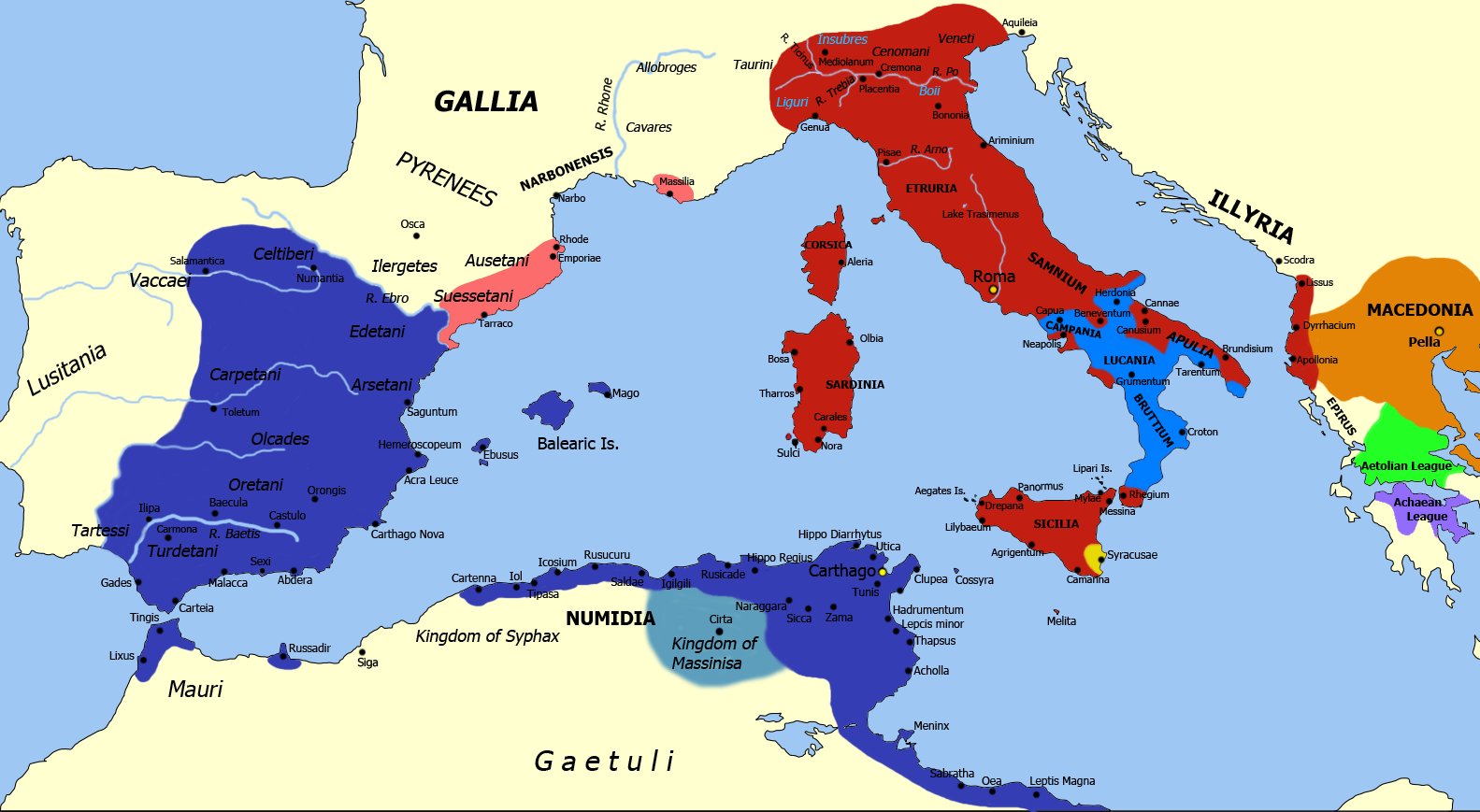 Controlling Sardinia allowed Rome to secure shipping lanes and deny naval bases to foreign powers.
The legions land: facing the fierce Sardo-Punic resistance
In 238 BC, Roman Consul Tiberius Sempronius Gracchus sailed with an armada to occupy Sardinia. If the Roman patricians assumed their soldiers could simply disembark and collect taxes from compliant towns, they suffered an immediate and violent awakening. Carthage had yielded on parchment, but the people living on the island had never been consulted, and they refused to bow to Roman authority.
Unlike eastern Sicily, where Greek colonies often welcomed Roman administrators, Sardinia was home to a tight-knit Sardo-Punic culture forged by centuries of intermarriage, shared religious worship, and economic alliances. Deep in the interior hills, the descendants of the ancient Nuragic civilization lived in rugged stone settlements, fiercely attached to their ancestral independence and mistrustful of foreign invaders.
The moment the Roman legions advanced away from the coastal harbors of Karalis and Tharros into the fertile Campidano valley, they were drawn into a grueling guerrilla war. The Roman Senate was forced to dispatch fresh consular armies year after year:
- In 236 BC, Consul Publius Cornelius Lentulus led hard-fought battles against mountain insurgents;
- In 235 BC, Titus Manlius Torquatus celebrated Rome's first formal military triumph over the Sardinians;
- In 233 BC, Spurius Carvilius Maximus had to wage another campaign to suppress widespread revolts;
- In 231 BC, Marcus Pomponius Matho imported packs of trained hunting dogs from the mainland to track Sardinian warriors hiding in mountain ravines and remote caves.
Rome discovered that buying an island with paper treaties was easy; conquering its people required decades of bitter, unglamorous combat.
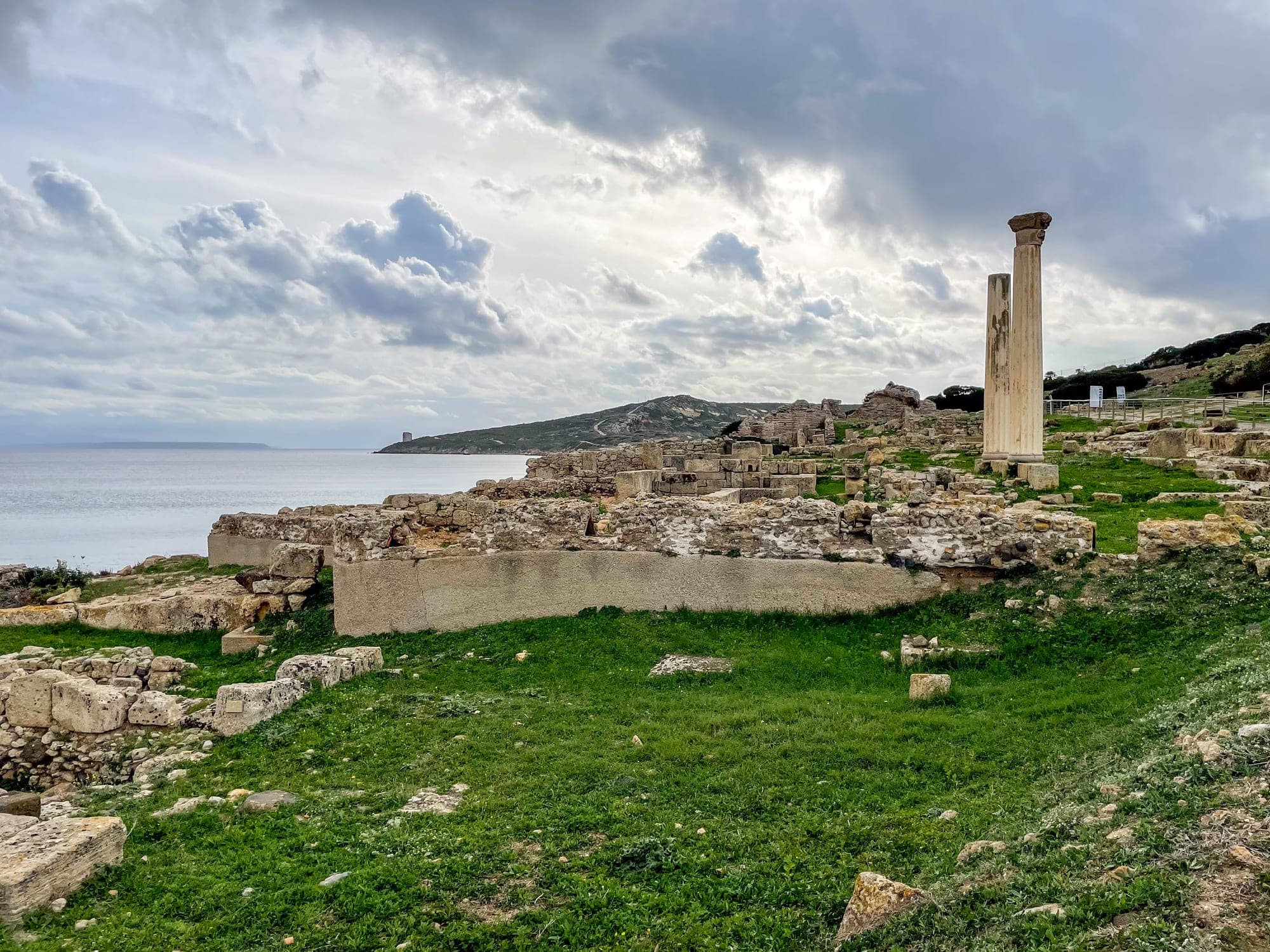
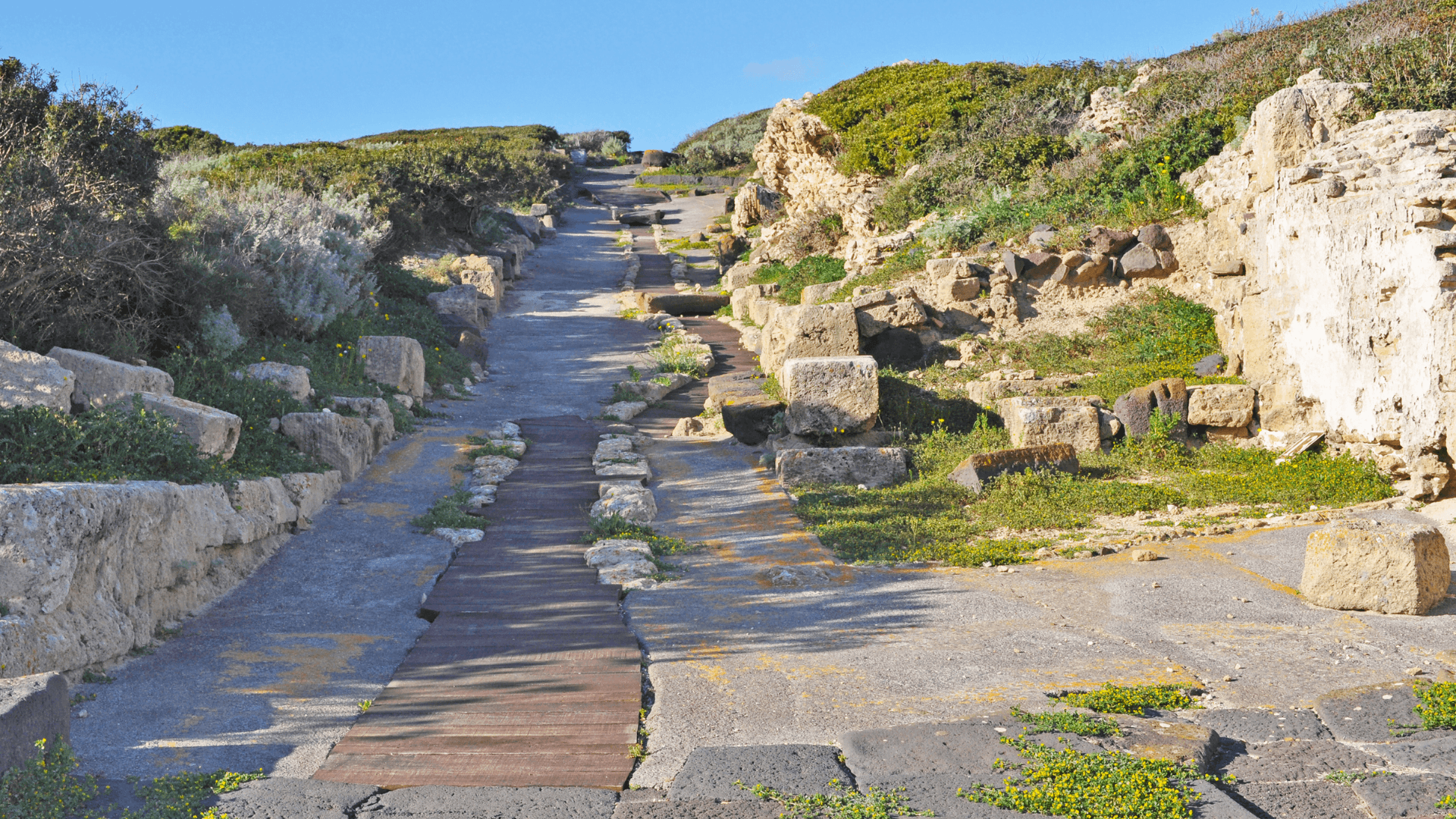 Roman paving stones and ashlar masonry built atop older Punic foundations along Sardinia's coastal cities.
Hampsicora and the Battle of Cornus: the island's last stand
The bloody climax of this resistance arrived in 215 BC, during the height of the Second Punic War. Hannibal Barca had shattered Roman armies on Italian soil at Cannae, plunging the Roman Republic into an existential panic. The Roman garrison in Sardinia was depleted, short on rations, and weakened by malaria, while crushing taxes levied by the praetor Aulus Cornelius Mammula drove local landowners to open revolt.
The revolt was led by Hampsicora, a wealthy Sardo-Punic aristocrat whose influence spanned both the cosmopolitan port towns and the warlords of the mountainous interior, known to the Romans as the Sardi Pelliti (the skin-clad Sardinians). Hampsicora established his military stronghold at Cornus, situated on the Campu 'e Corra plateau near the modern town of Cuglieri. From this mountain fortress, he coordinated a nationwide rebellion and sent covert messengers to Carthage requesting urgent military intervention.
Carthage seized the chance to open a second front against Rome and dispatched a fleet carrying twelve thousand foot soldiers and fifteen hundred cavalry under the command of Hasdrubal the Bald. However, a violent Mediterranean storm blew the Carthaginian fleet off course toward the Balearic Islands, delaying their arrival by crucial months.