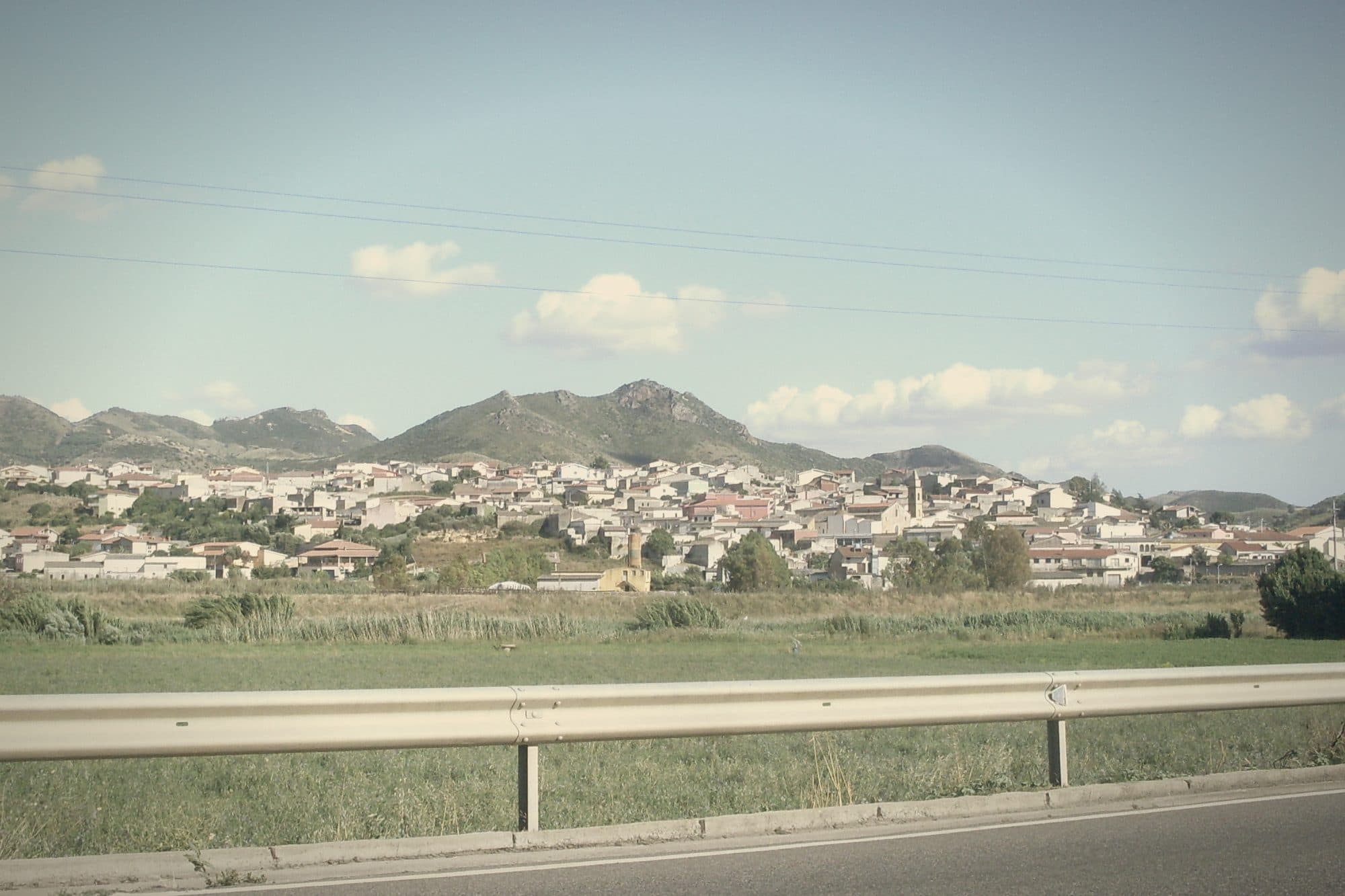
In the heart of the Marmilla, a region of rolling hills and fertile plains in south-central Sardinia, lies a landscape that for just over a decade embodied the illusion of a modern-day gold rush in the Mediterranean. The hills of Santu Miali, within the municipal territory of Furtei, guarded a secret invisible to the naked eye: an auriferous deposit that, between 1997 and 2008, became the last major industrial gold-mining venture in Italy. But the gold of Furtei did not glitter in riverbeds, nor did it show itself in rich quartz veins waiting to be chipped away with a pickaxe. It was a microscopic treasure, locked deep inside volcanic rock, whose extraction required cutting-edge chemical technologies, massive open-pit excavations, and ultimately left behind a heavy environmental toll. When the last raw bullion bar was poured and the mining company declared bankruptcy, the golden dream turned into an ecological emergency, marking the end of an era and the beginning of a long, publicly funded cleanup.
The Golden Dream of Marmilla: The Rise of Sardinia Gold Mining
The industrial history of Furtei began in the late 20th century, in a region traditionally dedicated to Mediterranean agriculture, olive groves, and sheep farming. Furtei is a quiet village of about 1,400 residents located in the Marmilla area, characterized by volcanic hills called marmitte and ancient geological formations. Geological surveys conducted in the second half of the 1900s revealed significant metallic anomalies in the Santu Miali hills. This was not a small, isolated deposit, but a fossil hydrothermal system rich in precious and base metals.
To exploit this hidden wealth, a mining concession was officially granted in 1997 to Sardinia Gold Mining S.p.A. (SGM). This company was established as a strategic joint venture between Progemisa (a public agency owned by the Regional Government of Sardinia to promote mineral resources) and an Australian corporation, Gold Mines of Sardinia. The involvement of Australian capital and expertise was no accident: Australia had a long history of extracting low-grade gold deposits and possessed the specific technology needed to make a seemingly poor deposit highly profitable.
In 1997, amid great local enthusiasm and hopes for an economic rebirth of the area, the first raw metal bar was poured at the Furtei processing plant. The local mayors of the time, including Ignazio Congiu (1995–2003) and later Luciano Cau (2003–2013), had to manage the arrival of a heavy industry that promised stable jobs and royalties for the municipality. For a few years, Furtei was thrust into the spotlight of international mining markets—a small Sardinian Klondike. This stood in sharp contrast to the decline then affecting Sardinia's historic mining basins in the southwest, such as the grand coal and lead-zinc mines like Montevecchio.
How the Mine Operated: Cyanide and Open Pits
The Santu Miali deposit was a high-sulfidation epithermal gold-bearing system. In simple terms, the gold was not concentrated in visible veins, but was finely disseminated as microscopic particles within volcanic rocks that had been heavily altered by hot hydrothermal fluids millions of years ago. To extract this invisible gold, traditional underground mining was economically unfeasible.
Instead, the company chose the open-pit mining method (open pit). This approach required the progressive removal of the Santu Miali hilltop, transforming the Mediterranean pastureland into a series of massive, stepped rock terraces. Once the gold-bearing ore was blasted and excavated, it was transported to crushing plants to be ground into an extremely fine powder.
The crucial phase of the process was the chemical treatment, known as cyanide leaching (cyanide leaching). The finely ground rock was piled onto large, impermeable pads or placed in reactors and sprayed with an aqueous solution of sodium cyanide. This powerful chemical compound binds selectively with gold and silver, dissolving them and separating them from the surrounding minerals. To speed up this chemical reaction, oxidizing agents such as oxygen or hydrogen peroxide were added to the mix.
Elsner's Equation (Gold Cyanide Leaching):
4 Au + 8 CN⁻ + O₂ + 2 H₂O → 4 [Au(CN)₂]⁻ + 4 OH⁻
Once the gold was dissolved into the liquid solution, it was recovered using activated carbon and then melted. The final product obtained at the Furtei plant was not pure 24-karat gold, but a raw, semi-refined alloy called a dore bar, containing a mixture of gold, silver, and copper.
Since Sardinia lacked the specialized industrial refineries required to separate and purify these metals, these raw bars were exported. Under the leadership of Monty Reed, then chairman of Sardinia Gold Mining S.p.A., the composite alloy was shipped directly to China. At the time, China was the only global market that could perform the final refining process at competitive costs, returning the purified precious metals to the international market.
The Numbers of the Sardinian Gold Rush
The production data from the Furtei mine, though limited to a brief eleven-year span, reveals the scale of the industrial effort undertaken at Santu Miali. Below are the total volumes of metals extracted between 1997 and 2008, compared with standard parameters of the global gold mining industry.
| Extracted Resource / Parameter | Value Recorded at Furtei | Notes and Industry Standards |
|---|---|---|
| Total gold extracted | ~5 metric tons | Total output between 1997 and 2008 |
| Total silver extracted | ~6 metric tons | A byproduct of the leaching process |
| Total copper extracted | ~15,000 metric tons | Base metal associated with the deposit |
| Economic cutoff grade | >0.5 ppm (g/t) | Minimum grade for open-pit mining |
| Average deposit grade | 1–5 ppm (g/t) | Typical concentration at Furtei |
| Grade for visible gold | ~30 ppm (g/t) | Virtually non-existent at Santu Miali |
The 5 tons of gold extracted represent a significant quantity for Italy, confirming Furtei as the country's most important modern industrial gold mine. However, to achieve this output, millions of tons of barren rock had to be excavated and processed, leaving a massive geological scar on the Marmilla landscape.
The Collapse and Abandonment: The 2008 Ecological Crisis
The fortunes of Sardinia Gold Mining shifted in the early 2000s. Between 2001 and 2003, the chairmanship of the company was assumed by Ugo Cappellacci, a figure who would later become a prominent regional political leader. Subsequently, between 2003 and 2008, control of the company and the mining lease passed to a Canadian multinational corporation, Buffalo Gold Ltd.
This corporate transition coincided with a progressive depletion of the high-grade ores and rising environmental management costs. In December 2008, in the midst of the global financial crisis, Sardinia Gold Mining S.p.A. abruptly declared bankruptcy.
The scene left behind was disastrous. The Canadian operators abandoned the site overnight, halting all environmental monitoring and safety operations. They did not carry out any of the environmental reclamation works that were legally required and explicitly agreed upon in their mining concession.
The primary hazard lay in the processing infrastructure. Below the open pits sat the tailing dam (tailing dam), a large artificial reservoir holding tons of toxic sludge saturated with cyanide solutions. In addition to the cyanide threat, the crushing of volcanic rocks rich in iron sulfides had triggered a destructive chemical reaction known as acid mine drainage (acid mine drainage).
When exposed to air and rainwater, the iron sulfides in the exposed rock oxidized, producing sulfuric acid. This highly acidic water then dissolved and mobilized heavy metals in the soil and rock, releasing toxic levels of mercury, lead, cadmium, iron, and sulfur. The acidic lakes that formed at the bottom of the abandoned open pits turned eerie shades of deep red and turquoise. They became lethal traps for local wildlife and posed a constant threat to the underground aquifers that feed the agricultural fields of the surrounding plains.
The Endless Cleanup and Public Debate
The sudden bankruptcy of the private operator left the entire burden of the environmental emergency on the public. Facing an imminent ecological disaster that could have contaminated the region's main river systems, the Regional Government of Sardinia had to step in.
The management of the site and emergency safety measures were entrusted to IGEA S.p.A., a public, regional in-house company responsible for reclaiming and securing Sardinia's old mining areas. IGEA's engineers faced a monumental task:
- Neutralizing the residual cyanide in the tailing ponds using chemical treatment.
- Constantly monitoring the stability of the tailing dam to prevent structural failure.
- Treating the acidic water accumulating in the open pits to prevent it from seeping into the agricultural water table.
- Removing and securing heavy-metal-contaminated soils around the chemical leaching pads.
The Furtei affair sparked a fierce public debate in Sardinia regarding the sustainability of modern mining. The fact that private companies reaped the profits of the gold and left the public to pay for the massive environmental cleanup generated deep skepticism.
This precedent had a decisive impact on the island's environmental policies. Following the environmental crisis at Furtei, the Sardinian government blocked all pending concessions for gold exploration and mining in other parts of the island, notably in the Sarrabus-Gerrei and Sassari regions. These areas had shown promising gold deposits, but they were located in areas of high ecological and tourist value.
To this day, the total public funds spent on the Furtei cleanup remain difficult to quantify, making it another open wound left by the mining industry in Sardinia, alongside historic sites like Argentiera.
Archaeometallurgy vs. Modern Industry: Sardinia's Ancient Metal Heritage
To understand how unusual the Furtei gold mine was, one must compare it to Sardinia's ancient metallurgical tradition. The island has been a hub of metal production in the Mediterranean for thousands of years, but its history is rooted in very different materials.
Since the 3rd millennium BC, Sardinia's prehistoric inhabitants exploited local mineral deposits. As explored in the article on the prehistoric mines of Sardinia, the extraction of copper and silver was widespread during the Bronze Age and the Nuragic civilization. Ancient Sardinians were master metallurgists, capable of producing high-quality bronze alloys and trading them across the Mediterranean.
In later centuries, the Phoenicians, Carthaginians, and Romans intensified mining activities, focusing especially on the silver-rich lead ores of the Iglesiente and Sarrabus regions. The island's silver wealth was famous in the classical world, as noted by the Roman writer Solinus:
«India ebore, argento Sardinia, Attica melle» (India is famous for ivory, Sardinia for silver, Attica for honey)
Yet, throughout this millenia-long history of mining, gold is completely absent. Unlike copper, lead, iron, and silver, there is no archaeological or historical evidence of gold mining in Sardinia during ancient times. The Furtei deposit was never touched by ancient miners, simply because the technology of the time could not extract gold that was so finely dispersed and invisible within the hard volcanic rock. The gold of Furtei was entirely a modern phenomenon, born and ended in a brief industrial chapter at the turn of the 21st century.
Debunking the Myths of Furtei's Gold
Due to the fascinating nature of gold, several myths have grown around the history of the Furtei mine. These can be debunked using geological and historical facts:
- "Sardinian gold was mined by the Romans or Nuragic people": This is historically false. While the area around Furtei is rich in archaeological sites, including Nuragic settlements and Roman traces, there is no evidence that these cultures ever mined gold from the Santu Miali hills. Gold extraction in Sardinia is strictly a modern, industrial story.
- "The Furtei mine produced pure 24-karat gold bars": Another common misconception. The smelting facility at Furtei only produced a raw, semi-refined alloy containing gold, silver, and copper. The chemical separation and final refining to obtain pure gold took place entirely abroad, mostly in China.
- "The mining site was fully restored by the company after operations ceased": Unfortunately, the opposite is true. Sardinia Gold Mining S.p.A. declared bankruptcy in 2008 and abandoned the site, leaving behind toxic cyanide ponds and acid mine drainage. All safety and reclamation efforts over the last fifteen years have been funded and managed by the regional public company IGEA S.p.A.
Today, the story of the Furtei gold mine stands as a cautionary tale about the delicate balance between natural resource exploitation, economic development, and environmental protection. What was once hailed as a new "golden age" for Sardinia turned out to be a short-lived illusion, leaving behind a crucial lesson on the true cost of mining.
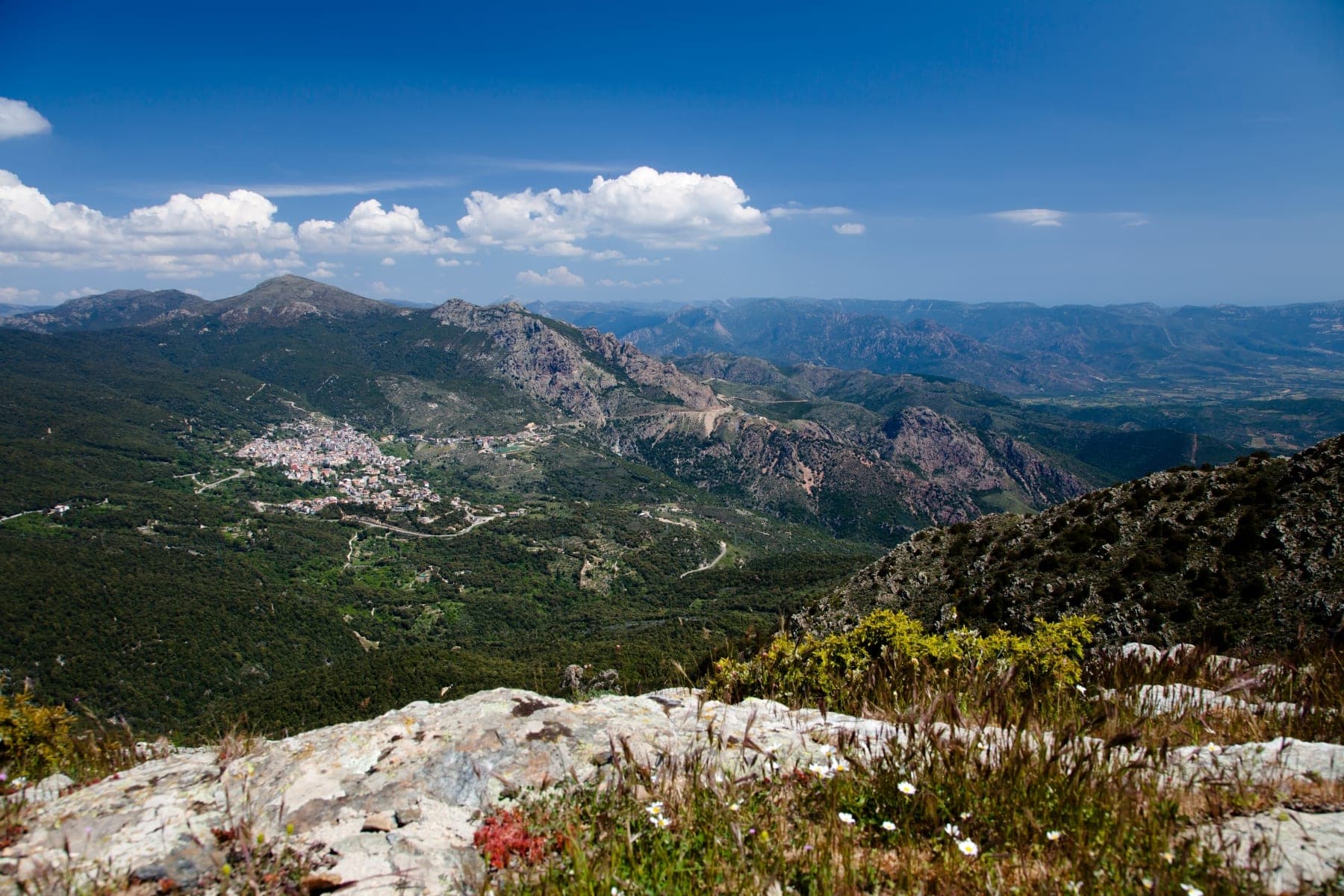
Cover photo: Giancarlodessi, CC BY-SA 3.0, via Wikimedia Commons (https://commons.wikimedia.org/wiki/File:Furtei.jpg)