Some intellectual figures are capable of inhabiting their land of origin not as a geographical limitation, but as a magnifying glass to decipher the complexities of the entire world. Michela Murgia, born in the Sardinian town of Cabras on June 3, 1972, and deceased in Rome on August 10, 2023, at the age of only 51, was undoubtedly one of these voices. A novelist, playwright, essayist, and fierce civil rights activist, she possessed a rare ability to transform the ancestral codes of Sardinian culture into sharp instruments of contemporary social critique. Throughout her prolific career, she addressed precarious labor, feminism, theology, and alternative family structures with the exact same cutting, uncompromising lucidity.
Her literary and human trajectory, which began on the brackish shores of the Sinis peninsula and reached the peaks of European narrative and essay writing, represents a unique phenomenon in the modern Italian cultural landscape. Through extraordinary novels like Accabadora and disruptive political pamphlets, Murgia forced the national public opinion to confront uncomfortable realities, polarizing debates while leaving behind an intellectual legacy that continues to sprout long after her premature passing.
The Waters of Sinis: Cabras and the Lagoon of Stories
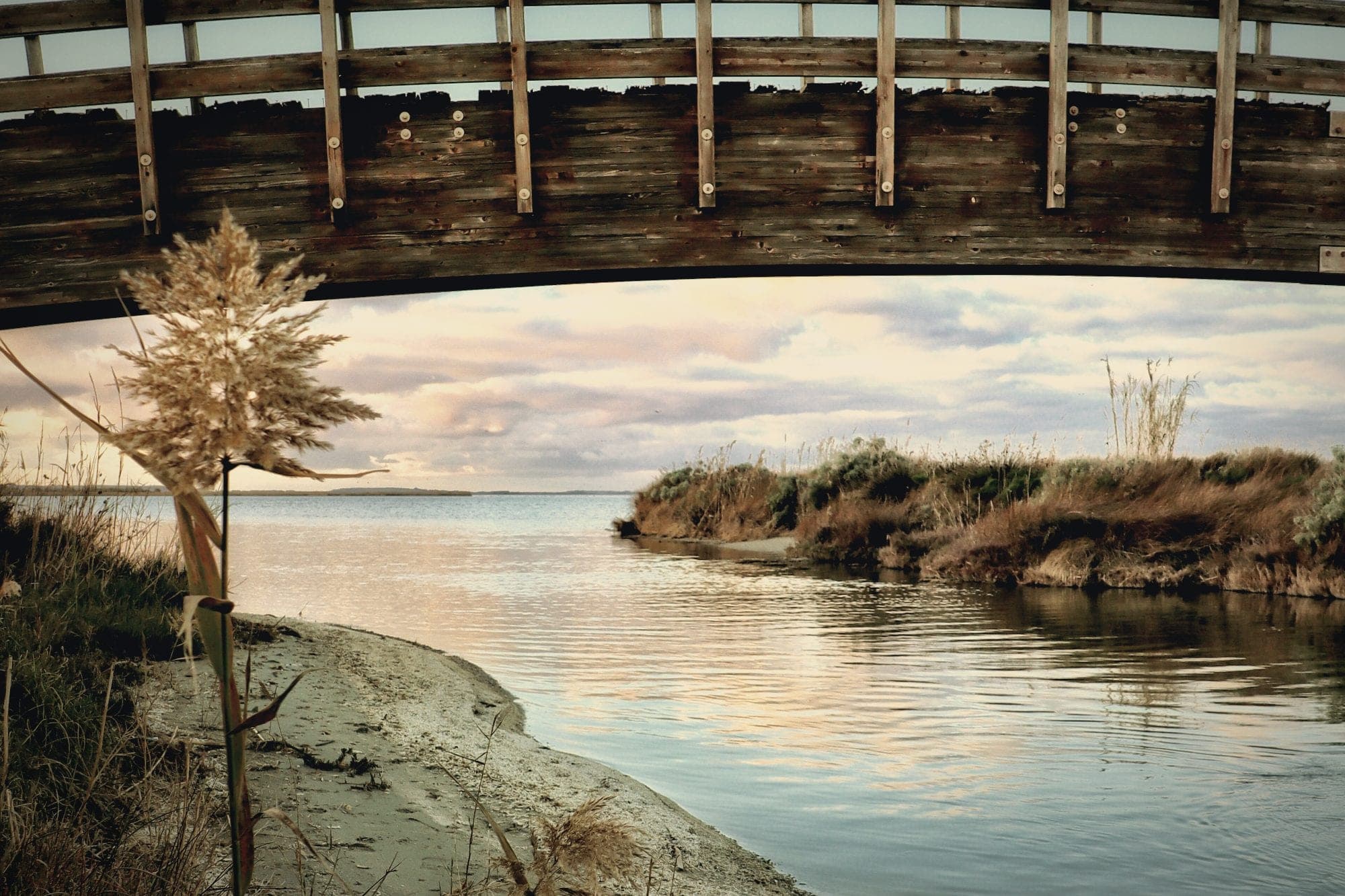
To understand the poetic and political world of Michela Murgia, one must start from Cabras. This large municipality on Sardinia's central-western coast lies on the edge of one of the largest brackish lagoons in Europe. It is a landscape of water and wind, dominated by the rustling of reeds shaken by the mistral, the flight of pink flamingos, and the silent profiles of fassonis—traditional boats woven from marsh grass that have glided over these waters since antiquity. This amphibious borderland, suspended between the dry clay of the plains and the open sea, left an indelible mark on Murgia's imagination. For years, on her personal blog Il Mio Sinis (My Sinis), she documented the rough, unpolished beauty of this territory, portraying it as a place where nature still dictates the rhythms of human existence and storytelling.
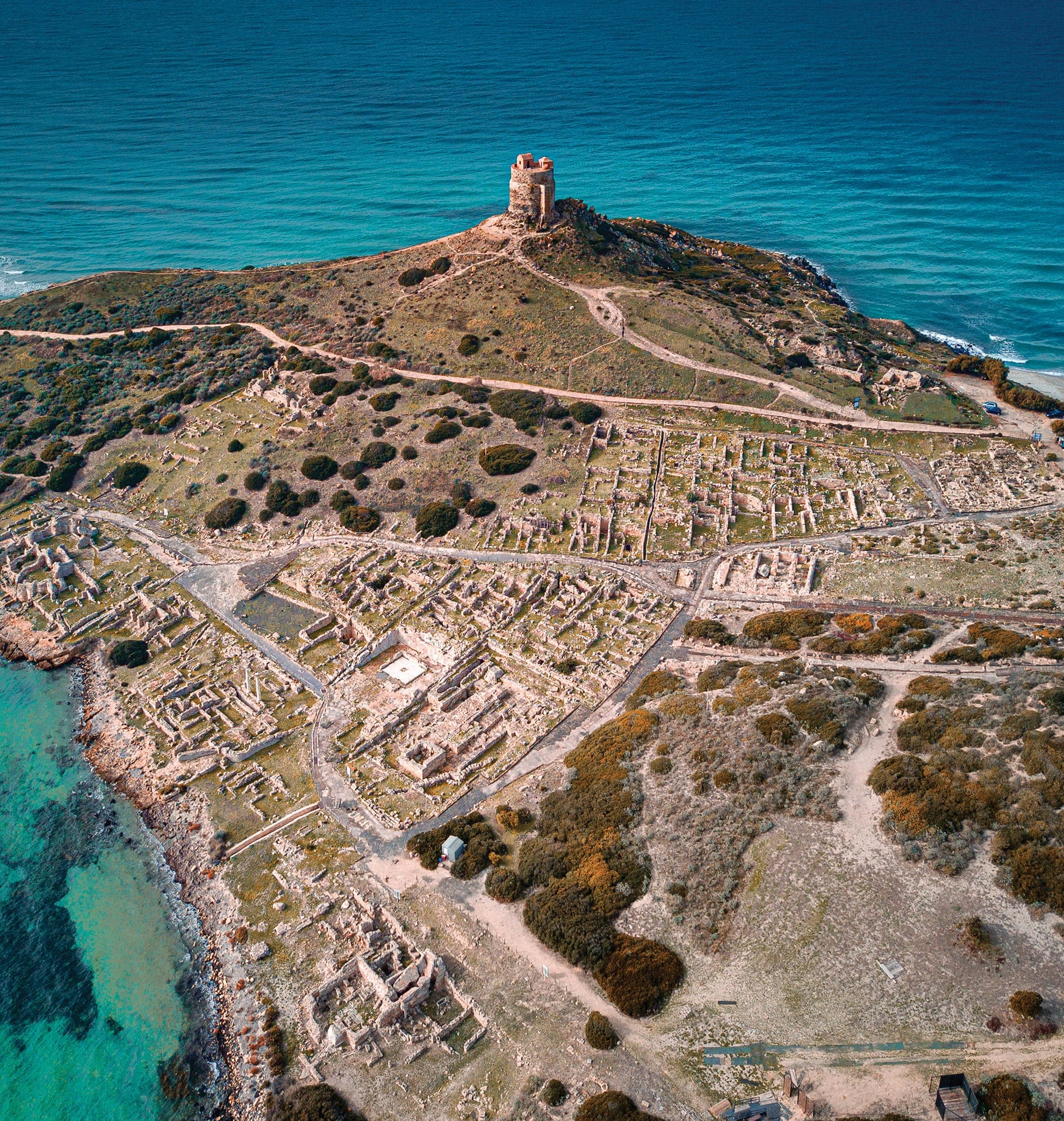
Cabras was not merely her childhood home; it was her school of narrative. It was in this corner of Sardinia, just a few kilometers from the Phoenician and Roman ruins of Tharros, that Murgia absorbed the dynamics of a community with strong matriarchal tendencies, the weight of oral history, and the density of communal bonds. In 2008, this deep geographical and cultural intimacy culminated in Viaggio in Sardegna. Undici percorsi nell'isola che non si vede (Travel to Sardinia: Eleven Paths Through the Invisible Island), a literary guidebook published by Einaudi. In its pages, Murgia guides the reader far from the glittering beaches of commercial tourism, revealing an interior, ritualistic Sardinia made of speaking stones, abandoned mines, and forgotten paths.
For Murgia, this visceral connection to her homeland never devolved into sterile nostalgia or folkloric isolation. On the contrary, she viewed Sardinia as an open-air political and social laboratory—a vantage point from which to deconstruct the dominant, exoticizing narratives imposed on the island by external forces, and a place to claim a cultural specificity that refused to be colonized or simplified for tourist consumption.
The Call Center and the Critique of Late Capitalism
Before establishing herself as an internationally acclaimed novelist, Michela Murgia experienced the harsh realities of the contemporary labor market firsthand. In the early 2000s, her life took an unexpected turn when she began working as a telephone operator for the multinational company Kirby, which specialized in selling high-end vacuum cleaners. To survive the alienating environment of the call center, she started an anonymous blog where she documented her daily experiences with fierce, dark humor. What began as an online survival diary quickly became a literary sensation.
In 2006, the publisher ISBN compiled these writings into her debut book, Il mondo deve sapere (The World Must Know). Subtitled "A tragicomical diary of a phone salesperson," the novel exposed the psychological manipulation, predatory motivational tactics, and extreme precarity hiding behind the scenes of the telemarketing industry. Written in a sharp, diary-style format where the grotesque constantly merges with social commentary, the book showcased Murgia's extraordinary talent for analyzing microscopic daily interactions to expose macroscopic generational crises.
The impact of her debut was immediate and far-reaching. The book was adapted into a theater play directed by David Emmer and, most notably, inspired the acclaimed 2008 film Tutta la vita davanti (Whole Life Ahead) directed by Paolo Virzì. With this explosive debut, Murgia proved that literature could still serve as an active tool of political inquiry, giving a voice to those marginalized by the invisible mechanisms of modern corporate exploitation.
Accabadora: Mercy, Death, and the "Children of the Soul"
Murgia's definitive international breakthrough came in 2009 with the publication of Accabadora (Einaudi), a powerful, atmospheric novel set in rural Sardinia during the 1950s. At the heart of the story is Bonaria Urrai, a quiet seamstress living in the fictional village of Soreni. Bonaria harbors an unspeakable secret: she is the village accabadora—a traditional figure recognized and respected by the community, tasked with bringing a "good death" to terminally ill patients who request it, ending their agony through a final, merciful gesture.
"Do not say 'she killed.' Bonaria Urrai helped destiny to fulfill itself when destiny was lazy." — Michela Murgia, Accabadora
The novel explores the delicate ethical boundaries of euthanasia, intertwining it with another ancient Sardinian custom of immense anthropological value: the practice of fillus de anima (children of the soul). This was an informal, affective adoption system, completely unrecognized by state laws but deeply respected by local communities. Under this custom, a family with many children would hand over one of them to a childless person or couple, establishing a lifelong bond of mutual care and responsibility that transcended biological bloodlines. In the novel, the young, impoverished Maria Listru becomes the "soul child" of Bonaria Urrai, embarking on a path of growth that eventually forces her to confront the dual nature of her second mother.
The critical and commercial success of Accabadora was extraordinary. In 2009, it won the narrative section of the prestigious Dessì Prize, and in 2010, it swept Italy’s major literary awards, winning both the SuperMondello and the Campiello Prize. Translated into English by Sylvester Mazzarella for Counterpoint in 2012, as well as into dozens of other languages, the novel established Murgia as one of the most authoritative and singular voices in contemporary European literature.
The Anthropological Debate: History or Folk Myth?
Beyond its literary merits, Accabadora reignited a passionate academic debate among historians and anthropologists regarding the historical reality of this figure. Scholars from Sardinian universities and the ISRE (Regional Ethnographic Institute) have long been divided on the matter.
On one hand, some researchers point to archival records, judicial documents, and oral testimonies collected in isolated pastoral communities, suggesting that these mercy-killing figures did indeed exist in the most remote areas of the island until the early decades of the 20th century. On the other hand, a large faction of contemporary anthropologists views the accabadora as a purely folkloric construct—a dark romantic myth born from the sedimentation of popular tales about death, mourning, and community-managed end-of-life care, lacking definitive, scientifically indisputable archival proof. Murgia herself always maintained that her Bonaria Urrai was a literary synthesis, a mythological archetype designed to challenge modern readers on universal questions of bodily autonomy, dignity in suffering, and the true nature of family bonds.
Sardinian Sovereignty and Political Activism
For Michela Murgia, writing was never detached from direct political action. Contrary to the superficial view that her entry into politics was a sudden, late-career whim, she had always been deeply engaged in civic and party dynamics. As early as 2007, she had actively supported the primary campaign of Mario Adinolfi for the newly formed Democratic Party, showing an early interest in national political debates.
However, her most original political commitment found its home within the Sardinian self-determination and independence movement. On February 16, 2014, Murgia ran for the presidency of the Autonomous Region of Sardinia, leading "Sardegna Possibile" (Sardinia Possible), a coalition that united progressive nationalists, environmentalists, and historic pro-independence groups like iRS (Independence Republic of Sardinia) and ProgReS (Project Republic of Sardinia). Her campaign, which focused on food sovereignty, ecological transition, the demilitarization of Sardinian land (which still hosts a massive share of Italy's military firing ranges), and the official recognition of the Sardinian language, shook the island's traditional political establishment.
Murgia achieved a historic result, securing approximately 10% of the vote (around 75,000 preferences) and positioning her coalition as a formidable third force. Although the restrictive regional electoral threshold prevented her from entering the Regional Council, the "Sardegna Possibile" experience proved that a political alternative to the traditional center-right and center-left coalitions was viable. This intense, public year also marked a turning point in her private life, leading to her divorce from her husband, Manuel Persico, whom she had married in 2010.
From "Patria" to "Matria": Redefining Belonging
Murgia's work sits firmly within the cultural phenomenon known as the "Sardinian Literary Spring" or "New Sardinian Literature." This movement, which emerged at the end of the 20th century and includes writers like Sergio Atzeni, Salvatore Mannuzzu, Giulio Angioni, and Marcello Fois, successfully dismantled the old, exoticizing stereotypes of Sardinia as a static, prehistoric island. Instead, they offered complex, modern narratives capable of dialogue with global themes without losing their historical and linguistic roots.
Within this literary landscape, Murgia stood out for her capacity to introduce radical linguistic and conceptual innovations. On November 15, 2017, in an editorial published in the prominent magazine L'Espresso, she proposed the wide-scale adoption of the neologism "Matria". With this term, Murgia sought to dismantle the traditional, patriarchal concept of "Patria" (Fatherland), which she argued was historically rooted in military defense, rigid borders, hierarchies, and exclusionary identity politics. "Matria," by contrast, was defined as a metaphorical space of hospitality, inclusion, mutual care, and a form of citizenship based on shared civic values rather than blood, soil, or military power.
The concept resonated deeply within Italian intellectual circles, leading to its official inclusion in 2019 as one of the neologisms of the year by the Treccani Encyclopedia. As with most of Murgia's provocative proposals, "Matria" sparked intense debate: while welcomed by feminist and progressive movements as a necessary utopian horizon, it was fiercely contested by conservative commentators who viewed it as an ideological attempt to weaken the historical foundations of national identity.
The Queer Family: Ancient Roots for a Modern Revolution
In the final years of her life, Murgia's essays and public interventions focused increasingly on dismantling patriarchy and deconstructing traditional gender roles. Books like Stai zitta (Shut Up, 2021) and God Save the Queer: A Feminist Catechism (2022) became instant best-sellers, sparking daily debates across Italian media, schools, and homes.
In this intellectual crusade, Murgia performed a brilliant theoretical operation: she retrieved the ancient Sardinian custom of fillus de anima to provide a historical, cultural, and highly traditional basis for the modern concept of the "queer family." For Murgia, family was defined not by biological bloodlines or heteronormative state contracts, but by chosen networks of affection, cohabitation, mutual care, and shared parenting.
"The queer family is not a bizarre exception, but the restoration of a historical truth that we in Sardinia have always practiced under the name of soul children." — Michela Murgia
This theoretical reflection became flesh and blood during the final months of her life. On May 6, 2023, in a moving interview with journalist Aldo Cazzullo in the Corriere della Sera, Murgia publicly announced that she was suffering from stage-four kidney cancer with diffuse metastases. She explained that she had chosen to forgo invasive treatments in favor of palliative care to maintain her quality of life, and that she would dedicate her remaining months to formalizing her chosen family.
On July 15, 2023, in a deeply political and civil act performed in articulo mortis, she married the actor and director Lorenzo Terenzi. The ceremony, held in the garden of her home in the presence of her "soul children" and closest friends, was described by Murgia as an act of protest against the inadequacy of Italian law, which fails to recognize or protect non-traditional emotional bonds during critical moments of illness, medical decision-making, and inheritance.
The Legacy of a Fearless Intellectual
Michela Murgia passed away in Rome on August 10, 2023. Her death triggered a wave of collective mourning that swept across Italy. On August 12, her funeral was held at the Basilica of Santa Maria in Montesanto, the famous "Church of the Artists" in Rome's Piazza del Popolo. The square outside was packed with thousands of readers, activists, and citizens who gathered to pay their respects to a woman who had made the courage of words her life's mission. At the end of the service, the crowd spontaneously broke into the anti-fascist anthem Bella Ciao, turning a private loss into a collective civil rite that perfectly mirrored her public life.
Murgia's voice, however, has not been silenced. Thanks to the meticulous work of her literary executors, Alessandro Giammei and Beppe Cottafavi, several major posthumous works have been published, ensuring her intellectual legacy continues to grow:
- Dare la vita (To Give Life, Rizzoli, 2024): An essay exploring surrogacy, motherhood, and the legal and emotional structures of the queer family.
- Ricordatemi come vi pare (Remember Me as You Please, Mondadori, 2024): An intimate, autobiographical work tracing her life through a series of late-night dialogues and personal confessions.
- Morgana. Il corpo della madre (Morgana: The Mother's Body, Mondadori, 2024): Co-written with Chiara Tagliaferri, the latest chapter of their highly successful podcast project dedicated to unconventional, non-conforming women.
- Anna della pioggia e altri racconti ritrovati (Anna of the Rain and Other Rediscovered Stories, Einaudi, 2025): A collection of early, unpublished short stories that return to the magical, atmospheric landscapes of rural Sardinia.
- Lezioni sull'odio (Lessons on Hate, Einaudi, 2026): A systematic collection of her essays and articles analyzing the mechanisms of hate speech in the modern public square and social networks.
Michela Murgia demonstrated that one can be profoundly rooted in a specific, ancient territory like Sardinia while being a fully realized citizen of the world. Through her life and writing, she proved that literature is not a place to escape from reality, but the very arena where the wounds of the present can be transformed into windows looking toward the future.
Cover photo: Rita Puddu, CC BY-SA 4.0, via Wikimedia Commons (https://commons.wikimedia.org/wiki/File:Scorcio_dello_stagno_di_Cabras.jpg)