Alisarda's first airliner took off in April 1964 from a dusty field in the Gallura countryside, in north-eastern Sardinia, bound for Rome Ciampino. It was a Beechcraft C-45, a twin-engine aircraft with eight seats. The runway was not paved. A country road ran alongside it, separated from the field by a low wall, and when an aircraft was about to land the traffic was stopped.
In its entire first year of operation, that airline carried 186 passengers. One hundred and eighty-six people in twelve months: fewer than a single August charter flight carries today.
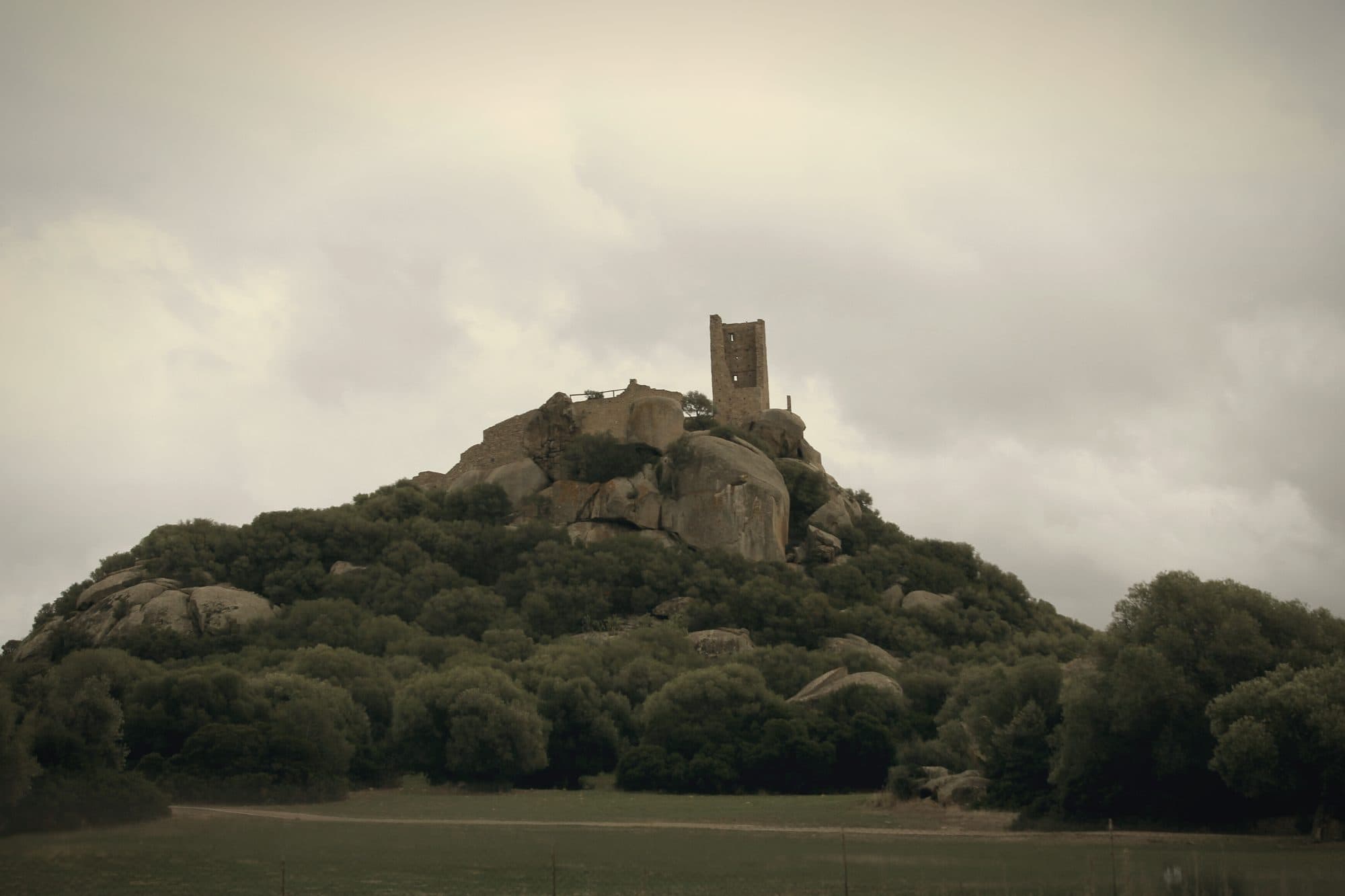
The field is called Venafiorita. It lies five kilometres from Olbia, on the road to Loiri, below the silhouette of the medieval castle of Pedres. The Costa Smeralda — the stretch of coast that became the most expensive holiday destination in the Mediterranean — took off from here. And it left here, in 1974, for a brand-new airport built two kilometres away. In 2025 that airport handled 4,128,015 passengers: roughly twenty-two thousand times the 186 of the first year.
A dirt field below Pedres castle
Venafiorita did not begin as a civil airport. It began as a military field, on marshy flatland towards the village of Loiri, overlooked by the granite hill carrying the medieval castle of Pedres. By the Second World War the field was already in use, and at that point it did not even have a built runway: aircraft took off and landed on packed earth.
Italian and German squadrons were based there. Then came the bombing: Allied fighters hit the field between the spring and summer of 1943. After the Italian armistice of 8 September, retreating German troops blew up what was left of the installation before handing the island over to the Allies.
After the war, someone tried running scheduled flights from it. It did not work. Italy's national carrier Alitalia opened routes and closed them again for lack of passengers: by 1954 Venafiorita was back to being a field among grazing flocks. In those years Gallura was not a destination. It was a beautiful, empty piece of coastline that you reached by sea and that almost nobody visited.
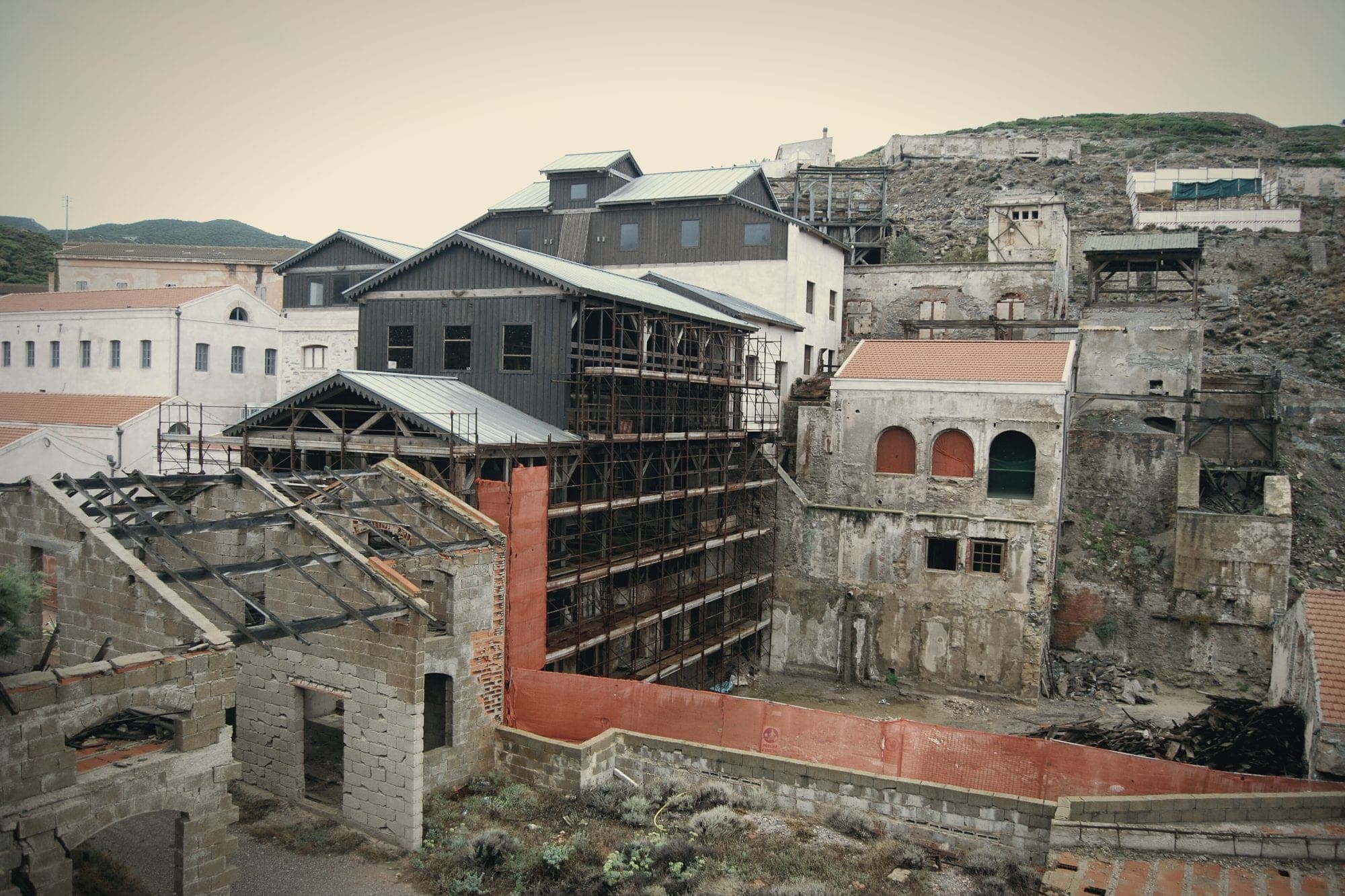
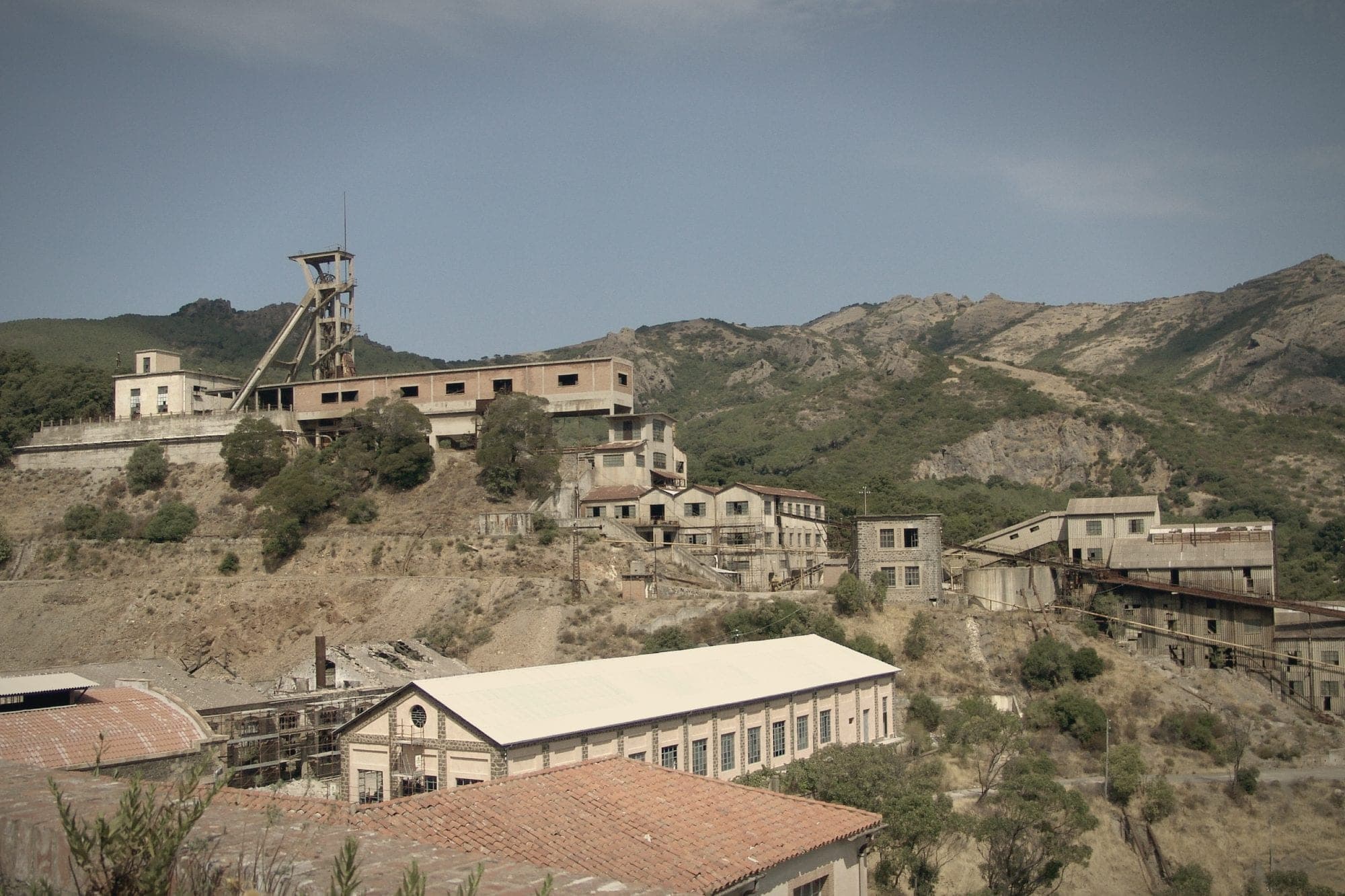
This is what makes Venafiorita different from Sardinia's other abandoned places. Argentiera and Montevecchio, the island's great mining ghost towns, died when the reason they existed ran out. Venafiorita did not: it was abandoned precisely because the reason it existed became too big for it.
Three airports, and a confusion that is still going
Look Venafiorita up online and almost every page will tell you the same thing: inaugurated on 15 May 1927, equipped with a seaplane base and an airfield named after Fausto Noce. The sentence has been copied from site to site for years. And it merges three different installations that were never in the same place.
Olbia's first aviation facility was the Fausto Noce airfield, opened on 21 June 1921 on the reclaimed ground of Sos Salineddas, a pond drained in the 1910s. That ground is now Olbia's municipal park, and it still carries the same name. Fausto Noce was an aviator born in Tempio on Christmas Day 1896 and originally from Porto Torres; he had died on 5 October 1920, aged twenty-four, crashing during a test flight.
The second was the Anfossi seaplane base, inaugurated on 15 May 1927 with a flight over the waters of the Porto Romano inlet, in the gulf of Olbia. It was named after Ettore Anfossi, a Royal Navy pilot born in 1893 and killed in 1918. That date, 15 May 1927 — the one everybody attributes to Venafiorita — belongs to the seaplane base.
Venafiorita is the third site, and it is somewhere else entirely: out in the countryside, south of the town. When it was actually built, the available sources do not say. Some local outlets push it back as far as the First World War, without saying where the claim comes from. The one documented fact is that by the middle of the Second World War the field was there and working. We would rather write it that way, with the hole left in, than fill it with a date borrowed from a different airport.
1963: a prince needs his coastline to be reachable
On 29 March 1963, in Olbia, Alisarda was founded. Its founder was Karim al-Husayni, Aga Khan IV, the same man who was then buying and reshaping the stretch of coast soon to be called the Costa Smeralda. The problem was simple and large: in 1963 that coast could only be reached by sea. No international traveller crosses the Tyrrhenian by ferry to sleep in a hotel that has not been built yet.
An airport was needed. The only one available was Venafiorita, an old wartime facility with a dirt strip.
Operations began on 1 April 1964, with two eight-seat Beechcraft C-45 twins, flying as an air taxi. In that first year, as noted, 186 passengers were carried. That is not a failure: that is what starting from nothing looks like. Two years later, in 1966, Alisarda operated as a scheduled airline for the first time. It had a single authorised route, Olbia to Rome Fiumicino and back. On that one route it flew 662 commercial flights and carried 5,640 passengers.
In two years the traffic had multiplied thirtyfold. The runway was still the same runway.
Check-in under a tree, and garlands of roses
Local reporting from those years describes a scene that sounds made up today. Check-in was done in a small cottage, and in summer, when the cottage became unbearable, it moved outside under a tree: a wooden table and four chairs. Landings happened in the dust thrown up by fleeing flocks of sheep, and among goats. A dry stone wall separated the field from the country road, and a traffic light stopped the cars whenever an aircraft arrived or departed.
And yet the people stepping off those aircraft were the people inventing the Costa Smeralda. Passengers were met by hostesses in traditional Sardinian dress handing out garlands of roses. Among those who landed at Venafiorita in those years was Ringo Starr of the Beatles, photographed on arrival.
It is a perfect short circuit: the most expensive luxury tourism in the Mediterranean, starting on a dirt strip, among sheep, with baggage check-in on a kitchen table. There was nothing picturesque about it at the time. It was simply the only airport Gallura had.
Then traffic grew and the field adapted as best it could. After Alisarda arrived, the runway was extended and paved, reaching the 1,380 metres that are still its length today. The fleet moved up from Nord 262s to Fokker F27s, steadily larger aircraft. And that is where the countdown started, because you can add asphalt to a runway but you cannot add room: the flatland was what it was, and the country road ran a few metres from the edge.
1974: the flights move two kilometres away
The decision took shape at the end of the 1960s. In 1969 the weather station was transferred: the first piece of Venafiorita to move. Between 1969 and 1974 the new Olbia-Costa Smeralda airport was built, two kilometres from the town centre. In 1974 all flights moved there.
Venafiorita left civil aviation after barely ten years of real activity. In 1976 the site became a helicopter base for the Carabinieri, Italy's military police force.
The technical reason sits entirely in those 1,380 metres. They were enough for the turboprops Alisarda was flying, the Fokker F27s, but not for the jet airliners that were becoming the European holiday standard through the 1970s. Extending the runway would have meant moving the country road, buying up farmland and redesigning the approach over a plain with a rocky hill right beside it. Building from scratch, on ground closer to the town and with nothing hemming it in, cost less and left more room for whatever came next. That was the calculation: not the abandonment of a place, but a decision not to pay for widening it.
The two numbers are worth putting side by side, because they tell the story better than any adjective:
| Venafiorita, 1964 | Olbia-Costa Smeralda, 2025 | |
|---|---|---|
| Passengers in a year | 186 | 4,128,015 |
| Runway | 1,380 m (paved after 1964) | commercial airport |
| Distance from Olbia | 5 km | 2 km |
Sixty-one years and two kilometres separate those two figures. The 2025 number comes from the Olbia airport service charter, the document the operator publishes through ENAC, Italy's civil aviation authority; the same document notes the airport could pass 5.3 million passengers by 2030. Sixty-eight per cent of that traffic falls between June and September — which is exactly the season the Aga Khan had in mind when he was landing an eight-seat Beechcraft among the goats.
What is left, and what still flies
This is where the second myth about Venafiorita needs taking apart: the one that calls it a completely abandoned ghost airport.
Part of the site genuinely is abandoned, and it is striking: the service buildings are skeletal ruins, the metal hangar is used as a cattle shed and store, the runway is still perfectly readable but fringed with weeds and brambles. That is the material behind the photographs that circulate online.
The field itself, however, is a working military area. It is home to the 10th Carabinieri Helicopter Unit, which operates across northern Sardinia, and on 15 June 2026 a new aircraft entered service there, an AgustaWestland AW119Kx used for aerial patrols against environmental crime. On OpenStreetMap the site is not mapped as a ruin: it is registered as a heliport, under the name "Aeroporto Militare di Olbia-Venafiorita". You cannot visit it, and the reason is not decay. The reason is that it is a base.
There is one episode that closes the circle almost too neatly. On 28 May 2018, on the Venafiorita field, the first scene was shot for Catch-22, the miniseries directed by and starring George Clooney, adapted from Joseph Heller's novel and released in 2019. The story follows American airmen stationed in Italy during the Second World War. Period bombers were trucked in to recreate it — onto a runway that Allied fighters had bombed for real seventy-five years earlier.
As for the future, proposals are not lacking: an aviation museum, an aeronautical hub, a motocross track. None of them currently has a timetable, funding, or a published agreement with the Carabinieri, who own the site. Until that agreement exists, they remain ideas.
What you can see today
Venafiorita cannot be visited: it is an active military area, with no public access of any kind. What you can do is look at it from outside, from the road running from Olbia towards Loiri, where the plain opens up and the long line of the runway stays recognisable even at a distance.
The natural viewpoint is Pedres castle, the medieval granite tower standing over the plain south of Olbia. From up there you understand at a glance why an airfield ended up precisely in that wide, flat valley floor — and why that valley floor eventually stopped being enough.
Two kilometres to the north, meanwhile, an aircraft lands every few minutes all summer long. One hundred and eighty-six passengers a year became four million. The runway where it all started is still there, under the grass, with helicopters flying off it.
Cover photo: Gianni Careddu, CC BY-SA 4.0, Wikimedia Commons