On 20 July 1258, on the eastern shore of a lagoon just outside Cagliari, the judge of Càralis and his Genoese allies surrendered. What followed was not an ordinary capitulation. The capital, Santa Igia, was razed to the ground and never rebuilt. The kingdom that ruled from it — the largest and wealthiest of the four into which Sardinia had been divided for some four centuries — ceased to exist within weeks, and its territory was carved into three.
This is the first of four pieces, one for each judicate, as those Sardinian kingdoms are known in English. Cagliari is the right place to start, because it raises the uncomfortable question straight away: why was the richest of the four also the first to vanish, a century and a half before the last one?
Four kingdoms left behind by a retreating empire
The judicates were not born of a revolution. Between the 8th and 9th centuries Byzantine authority over Sardinia gradually stopped working: contact with Constantinople thinned out, Arab raiding made the Tyrrhenian dangerous, and the two offices that governed the island — the civil praeses and the military dux — collapsed into a single figure, the iudex Sardiniae, the judge of Sardinia.
That single judge delegated the four outlying districts, the partes, to four lieutenants, the lociservatores. Over the following decades those lieutenants stopped being deputies and became sovereigns. The result was four kingdoms — Cagliari, Torres, Gallura and Arborea — which resurface in the written record after the year 1000 already fully organised.
The legal historian Enrico Besta, whose 1933 entry Giudicati in the Enciclopedia Italiana remains one of the most cited summaries of the subject, stressed exactly this point: the judicate order did not break with the Byzantine past, it extended it. The proof is in the titles. Sardinian rulers called themselves iudices de logu and also reges, kings — but in Cagliari the judge long bore the Greek title of archon and the court dignity of protospatharios. A local ruler still signing himself with a Constantinople court rank, centuries after Constantinople had stopped mattering on the island.
Below the judge, the land was divided into curatorie: districts made up of a cluster of villages, the biddas, answering to a district seat. The curatore was appointed by the judge for a fixed term — he was not a feudal lord and inherited nothing — and had three jobs: regulating the use of public land, running the armed levy, and presiding over the court. At the top sat the corona de logu, the assembly that judged and administered alongside the ruler. Exactly how many curatorie Cagliari held is unclear: sources give either fourteen or sixteen.
The judicate of Cagliari, or Calari, covered an estimated 6,000 square kilometres. The figure comes from the regional government's own historical summary, it is the only one in circulation, and it should be taken for what it is: an estimate. Arborea, for comparison, held around 4,500. Cagliari was the largest, and that same source calls it, without hedging, the richest.
The wealth was not an impression. It was made of things you could load onto a ship. Salt, wheat, barley, hides, wool and lead left the judicate for Pisa and Genoa. The Campidano plain behind Cagliari held the most productive grain land on the island; the Iglesiente, at its western end, held the metals — ore bodies Sardinians had been working since prehistory, as we covered when writing about the island's earliest mines.
The single most strategic commodity, though, was salt. You can measure how much it mattered by one detail: in 1256, when the judge of Cagliari signed an international treaty with the Republic of Genoa, one of the terms he committed to was guaranteeing salt exports. Not a trading concession among many — one of four conditions written into a treaty between states.
A kingdom like that could not go unnoticed. Pisa and Genoa had been competing over it for two centuries, ever since 1015-16, when an attack on the Sardinian coast by Mujāhid ibn Allāh al-ʿĀmirī prompted Pope Benedict VIII to call in the two maritime republics. The attack was repelled; the Pisan and Ligurian merchants stayed. From then on, their trade on the island only grew.
1217: the hill handed to Pisa
The decisive blow was not military. It was a grant.
In 1217 the giudicessa — the reigning queen — Benedetta de Lacon-Massa granted the Pisan merchant community the hill that rises northeast of her capital. There the Pisans built the Castellum Castri de Callari, the Castle of Castro, and the church of Santa Maria: a fortified town entirely theirs, a short ride from the judicial court.
Historians still argue over the exact date. Some put the founding of the Castellum Castri as early as 1215, others at the 1217 grant, others spread the construction across the following fifteen years. The debate is live enough that a University of Cagliari paper is titled, literally, "Castrum novo Montis de Castro" and the origin of Pisan Cagliari: a question still under discussion. This is not pedantry: whether the fortress came before or after the act of cession changes what the cession meant — whether Benedetta granted something, or ratified something already done.
What is not in dispute is the result. From that point two incompatible powers sat within a few kilometres of each other on the same gulf: the judicial court at Santa Igia, a low-lying lagoon town shielded by marshes, and a Pisan stronghold on the hill above it. Whoever held the hill could see the other. Whoever sat below could not.
For the next forty years the judicate of Cagliari was formally independent and effectively mortgaged. Its judges already belonged to the marquises of Massa, a Pisan house installed on the Cagliari throne since the 12th century: not foreigners invading, but relatives administering.
Chiano switches patrons, and dies for it
Shortly after 1250 the throne passed to Chiano — Giovanni Torchitorio V — of the Massa line, his mother from the Serra family of Arborea. Like his predecessors, he had to swear an oath to Pisa. We do not know where or when he was born; we know he never married and died childless, and that on 23 September 1254 he dictated a will naming his cousins Guglielmo and Rinaldo Cepolla as universal heirs. That will, written when nobody was in a hurry, would decide everything two years later.
In February 1256 Chiano decided to flip the table. He sent envoys to Genoa to negotiate an alliance against Pisa. The pact was signed on 20 April and ratified on 25 May 1256 in the castle cathedral. The terms he accepted show how cornered he was: hand the castle to Genoa, accept Genoese citizenship, guarantee salt exports, and marry a young Genoese woman. In practice, Chiano was swapping patrons and hoping the new one would be less intrusive.
Genoa took it seriously. That same year it appointed Simone Guercio and Niccolò Cigala admirals of a squadron of twenty-four galleys and sent them to Sardinia to consolidate Genoese positions in the judicate. It was a substantial fleet. It arrived too late.
Because Pisa did not wait. Pisan forces stormed the castle, and in that assault Chiano was defeated and captured. He died a prisoner on a date the sources can only narrow to somewhere between 17 July and 15 October 1256 — before the Genoese relief could reach him.
One correction worth making here, because the error is everywhere: Chiano and William III were not the same man. You will often read of "William III Salusio VI, known as Chiano", as though the last judge had two names. They were two different men and two consecutive reigns — which is exactly what the 1254 will was for, passing the crown from one to the other.
On Chiano's death, accordingly, the title passed to his cousin and heir, Guglielmo (William) III Cepolla, the figure the chronologies call William III Salusio VI. On 15 October 1256 William agreed to hand admiral Simone Guercio the city of Santa Igia itself — the capital, not an outpost — and received from him investiture of the judicate as a vassal of the Commune of Genoa. The same day, oaths of fealty were sworn into Guercio's hands. The kingdom of Cagliari had stopped being independent; it had merely changed which distant power it answered to.
The counterstroke came as soon as Pisa was free to move. Having made peace with Lucca and Florence, the Tuscan republic launched its counter-offensive, led by the Gherardesca of Donoratico and by William of Capraia, judge of Arborea. And this is what makes the fall of Cagliari a Sardinian story rather than just a war between maritime republics: the other three judicates of the island joined the coalition. Arborea, Torres and Gallura fought against Cagliari.
Genoese resistance broke within about eighteen months. The siege of the capital began in 1257; on 20 July 1258 the judge and the Genoese surrendered. Santa Igia was destroyed, and William III ended his life in exile in Genoa. With him, the judicate of Cagliari ceased to exist as an autonomous state.
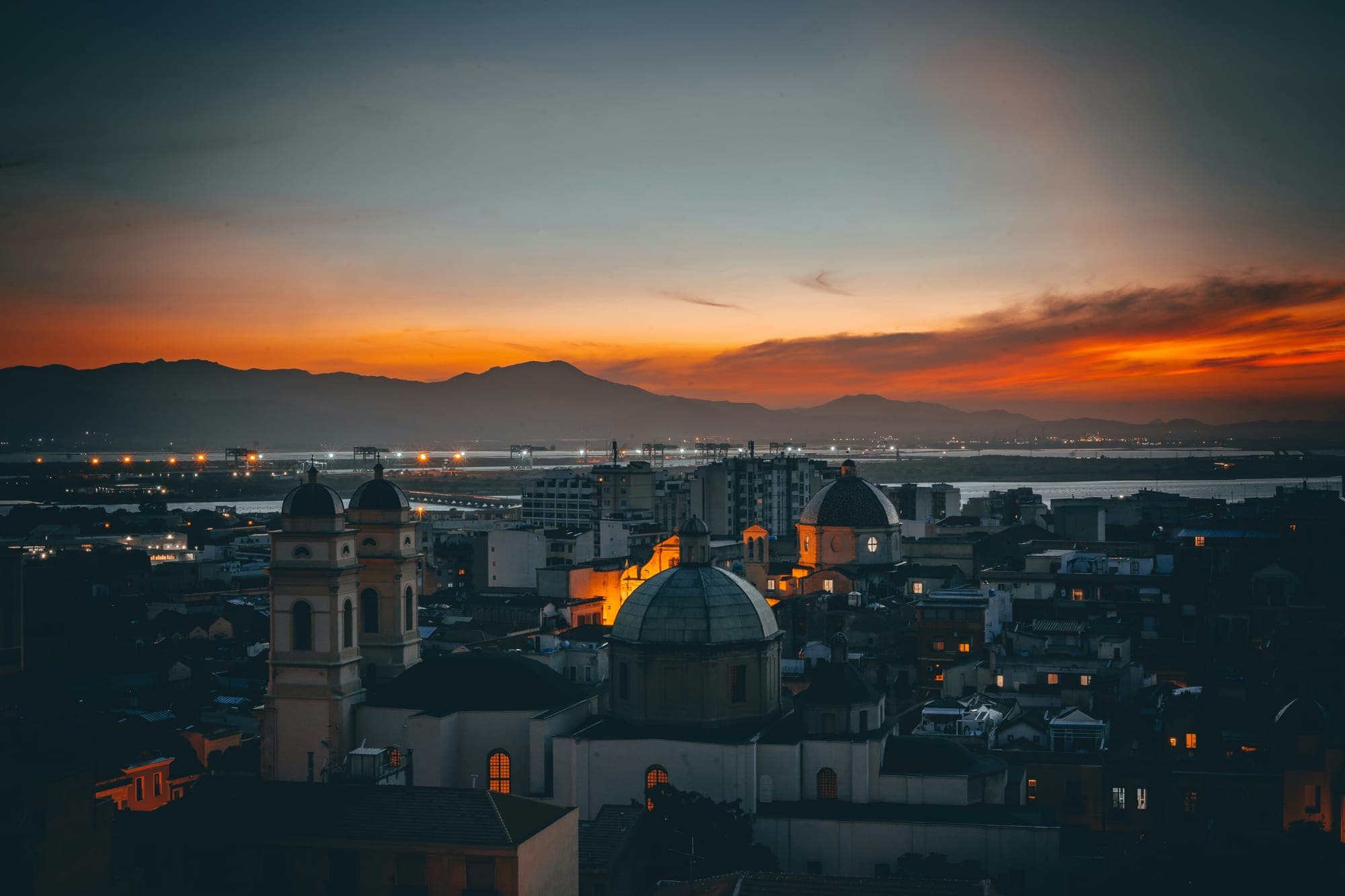
The capital was not rebuilt, and that is meant literally. In 1258 itself the cathedral see was established at Santa Maria di Castello, inside the Pisan fortress on the hill: the cathedral of the destroyed city moved into the victors' house, and Cagliari's centre of gravity shifted uphill, where it has stayed ever since.
The kingdom split three ways
Also in 1258, the territory was divided. Three shares, three winners:
| Share | To whom | Where |
|---|---|---|
| North-eastern third | Giovanni Visconti, judge of Gallura | Ogliastra, Sarrabus |
| Central-northern third | William of Capraia, judge of Arborea | the belt facing Arborea |
| Western third | Gherardo and Ugolino della Gherardesca, Pisan counts | Sulcis and the Iglesiente |
The last line had the most spectacular sequel. The western third went to the Della Gherardesca of Donoratico — the family of that Count Ugolino whom Dante would place in the thirty-third canto of the Inferno. Ugolino understood what he had been given: not farmland, but mountains full of silver and lead. So he had a new town founded specifically to dig it out — Villa di Chiesa, today's Iglesias.
The sources disagree on the founding date: the town council puts it at 1282, while the first documented appearance of the place name Villa Ecclesiae is 1272. Call it the 1270s or 1280s. What the sources agree on is the outcome: by the early 14th century, the mines of Villa di Chiesa were producing roughly 10% of all the silver circulating in Europe.
That figure is worth rereading. A tenth of Europe's silver came out of a stretch of Sardinia that a few decades earlier had been a district of a defeated kingdom. The wealth Pisa had wanted was real, and the winners turned it into money within a single generation.
The sequel is well known and bitter: in 1324, after a siege lasting more than seven months, Villa di Chiesa surrendered to Aragon. It was the first Sardinian town to fall under Iberian rule — a distinction that rhymes rather closely with the one held by the judicate it grew out of.
Why the richest one went first
Lined up, the four kingdoms end like this: Cagliari in 1258, Torres in 1259, Gallura in 1298, Arborea in 1420. The richest fell first, and the last one held out 162 years longer.
It is not a paradox, if you follow the sequence. Cagliari's wealth was concentrated and portable — salt, grain, metals, all of it loadable at a quay — and the kingdom sat exactly where Pisa and Genoa needed a harbour. It was the most desirable and the easiest to reach.
Then there is the geography of the capital. Santa Igia sat low, on a lagoon, shielded by marshland: excellent protection against raids from the sea, useless against a fortress built on the hill overlooking it. From 1217 onwards the judicate had a foreign body inside its own house, a few kilometres from the palace.
And finally the move of 1256. Switching from Pisa to Genoa was not irrational — it was an attempt to use one power against the other — but it converted economic pressure into open war, with the judicate in the middle and no army of its own able to absorb it. Chiano died a prisoner before the galleys he had summoned arrived. His cousin handed over the capital in exchange for a protection that did not last two years.
Arborea, in 1258, was on the winning side, and took a third of the defeated kingdom. It lost its capital in 1410 and lasted until 1420: the last of the four, and the only one that watched Cagliari fall from the outside. But that belongs to another instalment.
Five things that usually get left out
1. The last judge was not called Chiano
This is the most widespread error about the whole affair: almost everywhere you read of "William III Salusio VI, known as Chiano", as if one man had two nicknames. They were two consecutive judges. Chiano — Giovanni Torchitorio V — reigned from roughly 1250 and died a Pisan prisoner in 1256. William III Cepolla was his cousin, named heir in the 1254 will, and lost the kingdom two years after receiving it.
2. A Sardinian king with a Byzantine court rank
While Pisa and Genoa carved up his trade, the judge of Cagliari went on styling himself archon and holding the dignity of protospatharios — ranks from the court of Constantinople. This was not antiquarian posturing. It was the sign that the judicates saw themselves as the legitimate continuation of the Byzantine order, not as something that had sprung up from nowhere.
3. Salt was treaty material
In the 1256 pact with Genoa, one of the four conditions Chiano accepted was guaranteeing salt exports — on a par with surrendering the castle and with his own marriage. The salt pans of the gulf were not an economic footnote. They were one of the assets worth signing a military alliance over.
4. Sardinians helped destroy Santa Igia
The short version says "the Pisans razed the capital". The documented version is less comfortable: the other three judicates were part of the coalition, and the counter-offensive was led by the Gherardesca together with William of Capraia, judge of Arborea, who took a third of the territory once it was won. This was not only a conquest from outside. It was also a carve-up among neighbours.
5. The capital lies under a service yard
Santa Igia is not an archaeological park you can visit. Its remains sit beneath the flyovers and warehouses between Cagliari's industrial port and the airport. The digging was done alongside roadworks, in a hurry: wall and house footings, the exedra of an aristocratic building, column fragments, mosaics, paved streets. Disconnected pieces, because everything else is under concrete.
What you can actually see today
Four centuries of kingdom have left very little to look at, but what is left is still standing.
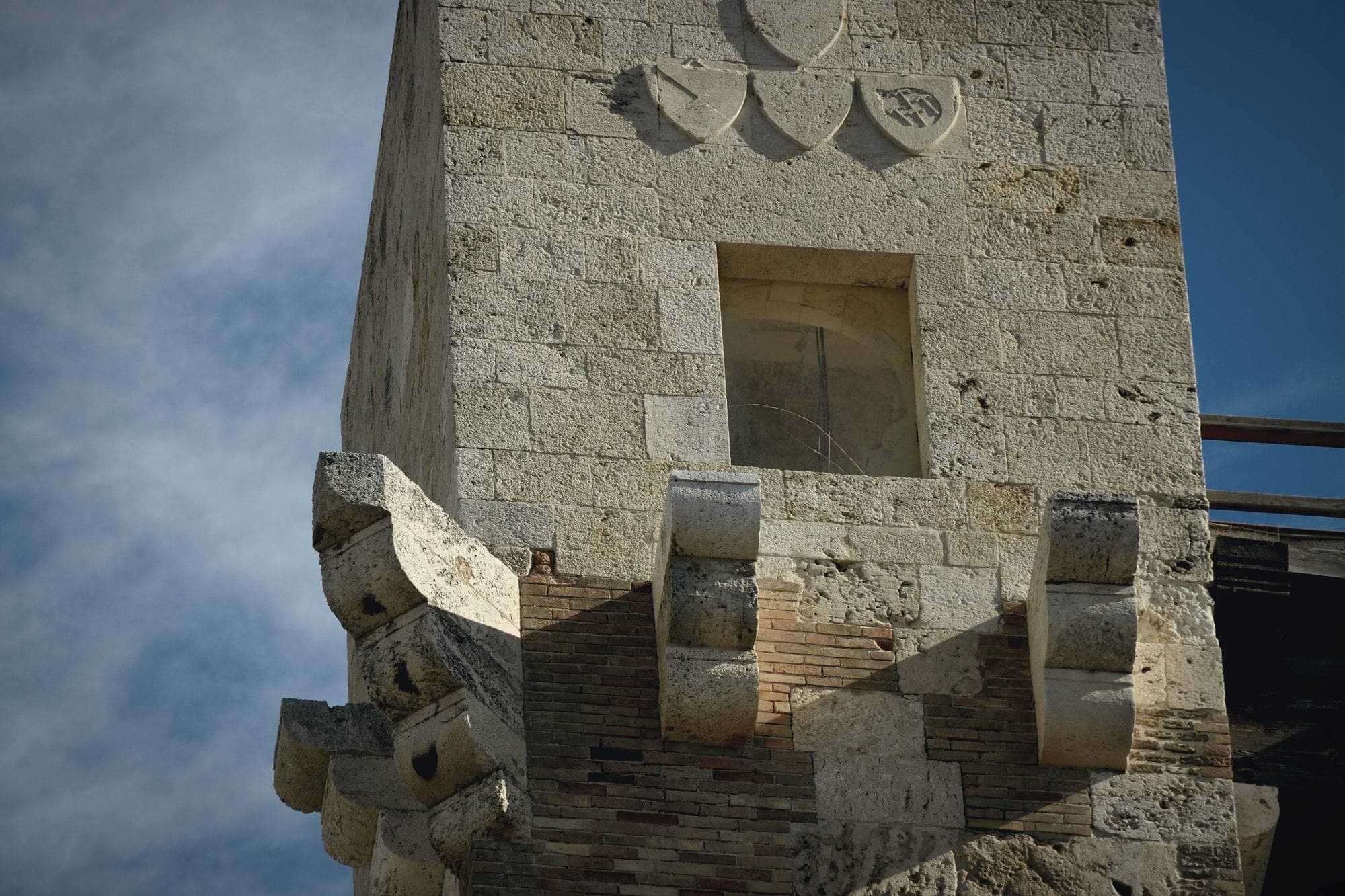
- The Torre di San Pancrazio, Cagliari. It rises on the hill Benedetta granted the Pisans in 1217, in the district that still takes its name from that fortress: Castello. The tower is open on the side facing the city, its wooden galleries exposed; from the top, looking west, you can see the lagoon where the capital once stood — the capital that fortress helped erase.
- Santa Maria di Castello cathedral, Cagliari. This is the see established in 1258, the same year Santa Igia was destroyed: the cathedral that replaced the one razed, inside the victors' walls.
- The lagoon west of Cagliari. Along the SS195 and on the road to Elmas airport you skirt the stretch of water on whose eastern shore Santa Igia stood. There is nothing to see, and in a sense that is precisely the point.
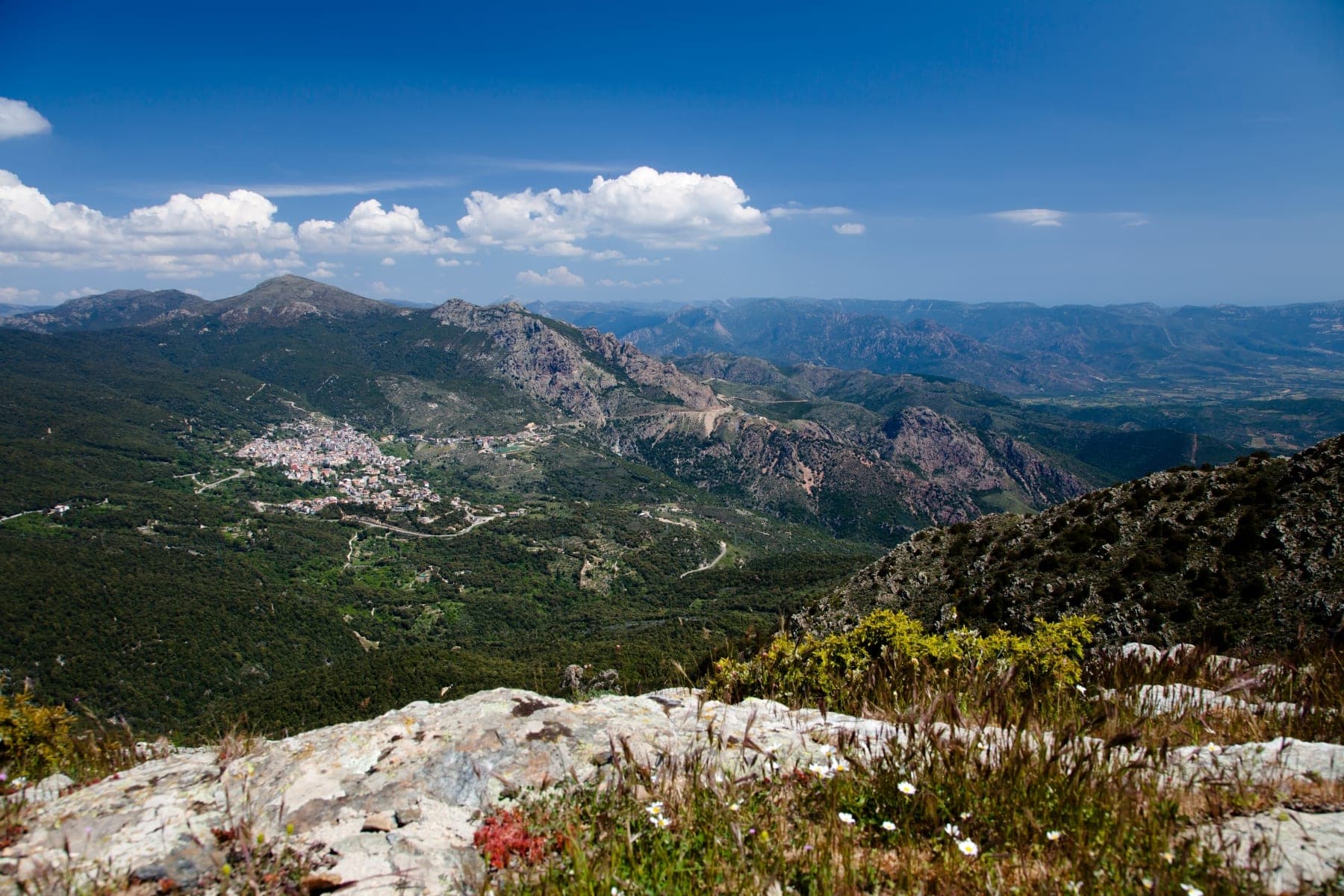
- Iglesias. The walls and towers above the old town are the ones raised by the counts who took the western third of the judicate. It is where Calari's wealth ended up, and where you understand why it was worth fighting for.
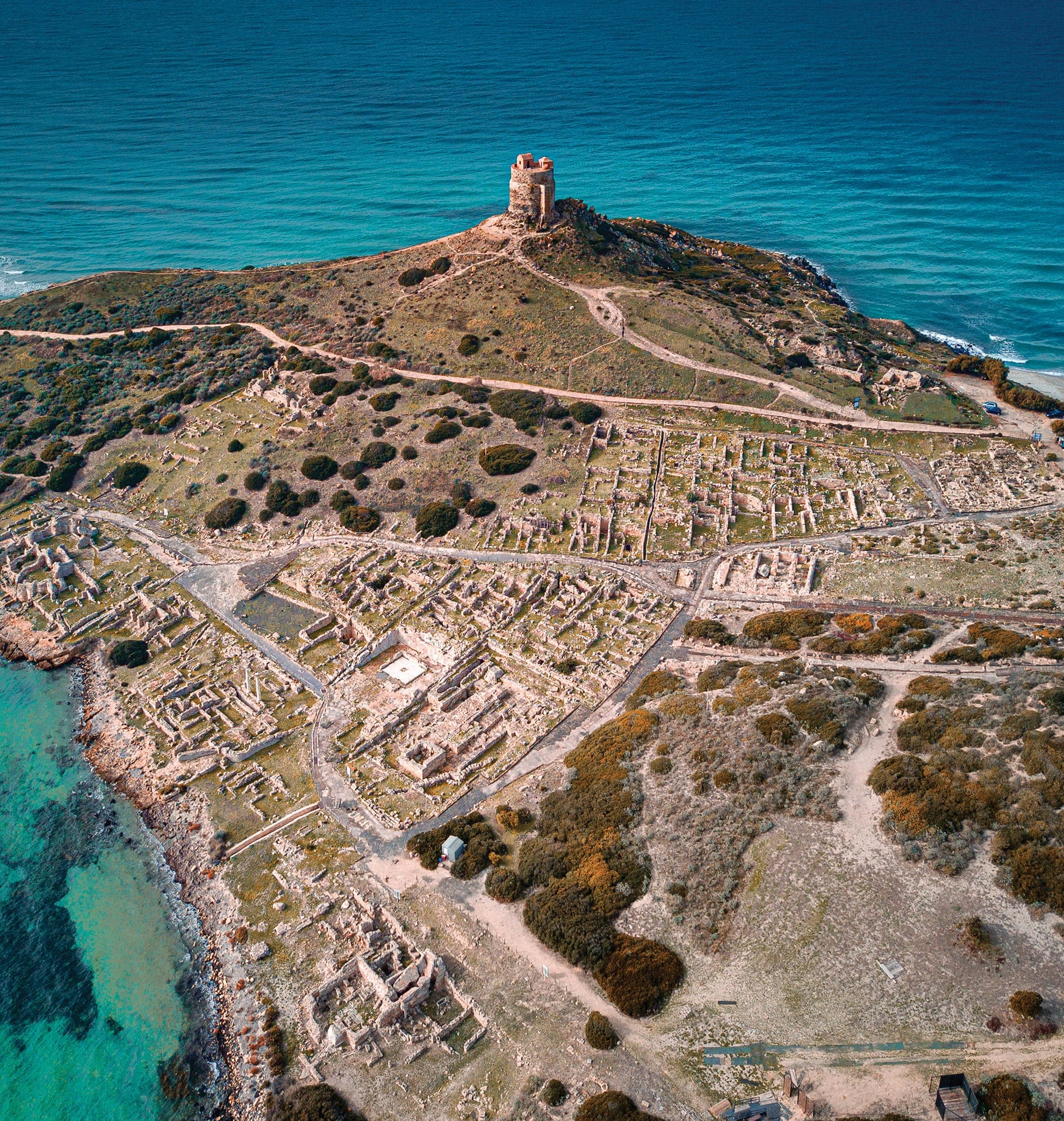
The story of the four judicates continues with Torres, which outlived Cagliari by exactly one year. In the meantime, for what Sardinia looked like before the judicates existed, there is the piece on the Vandal and Byzantine centuries; and for another capital that changed both its site and its name, the one on Tharros and the Sinis.
Cover photo: Crimao, CC BY-SA 4.0, Wikimedia Commons